EU Meat Terminology Proposal: The Fight Over "Veggie Burger
Editorial note: This article was prompted by a post titled "A terminology proposal" attributed to writer Karl Olson (Bluesky handle karlrolson.com /
Researched and drafted with AI assistance, then screened by automated editorial checks before publishing. How we work.

Editorial note: This article was prompted by a post titled "A terminology proposal" attributed to writer Karl Olson (Bluesky handle karlrolson.com / Ultraklystron), which surfaced in online discussion around April 2024. Because that post is behind a JavaScript-gated platform and could not be retrieved for this review, this article does not quote or paraphrase it, and we make no claim about its content, tone, or intent — including whether the widely cited April 1 date carries any satirical framing, which we could not verify. What follows uses the general idea of a "terminology proposal" as a starting point and otherwise draws entirely on well-documented public-record context — EU legislative history, vote outcomes, and national decrees — to explore the broader questions such proposals raise. Nothing substantive in this article is attributed to Olson's post; everything below is independently verifiable public record.
What a "Terminology Proposal" Actually Is — and Why It Is Never Just Semantics
A terminology proposal is a formal or semi-formal recommendation to standardise the words used to describe a category of things. In legislative contexts, these proposals carry real force: once a term is enshrined in regulation, it determines what can be sold, how it must be labelled, which products face tariffs, and which marketing claims are legally permissible. In technical contexts — think programming language specifications, API naming conventions, or the endless debates over what counts as "artificial intelligence" — the same principle applies. Whoever controls the vocabulary controls the ontology, and whoever controls the ontology shapes what is even thinkable within a given system.
The EU meat terminology proposal is one of the most visible live examples of this dynamic in mainstream policy. At its core, the question is deceptively simple: should plant-based products be permitted to use words like "burger," "sausage," "steak," or "schnitzel" on their packaging? The traditional meat industry argues that these terms belong exclusively to animal-derived products, and that applying them to plant-based alternatives misleads consumers. Plant-based producers and a substantial body of consumer research counter that shoppers are largely not confused — and that restricting the terminology is, in their view, a protectionist manoeuvre dressed up as consumer protection.
Why it matters beyond food: Every time a powerful incumbent industry attempts to lock down terminology through regulation, it sets a precedent for how language can be used to shape markets. The same pattern appears in debates over what can be called "AI," what qualifies as "open source," and what constitutes a "smart" device. Terminology proposals are, in effect, policy written in the grammar of standards bodies and regulatory annexes.
The EU Meat Terminology Proposal: Background and Timeline
The European Union's engagement with meat-adjacent terminology has a longer history than most people realise. Dairy terminology was addressed relatively early: under the EU's Common Market Organisation regulation, Regulation (EU) No 1308/2013, designations such as "milk," "butter," "cheese," and "cream" are legally reserved for products of animal origin across the bloc — with a narrow set of exceptions for products with long-established traditional names. The Court of Justice of the EU reinforced this in its 2017 TofuTown ruling (Case C-422/16), which held that purely plant-based products generally cannot be marketed under those reserved dairy designations. This is why oat-based drinks are typically sold as "oat drink" rather than "oat milk" in EU supermarkets, even where the rest of the world uses "oat milk" without apparent civilisational collapse.
The push to extend similar restrictions to meat terminology gained serious momentum inside the European Parliament around 2020–2021, when amendments considered during the reform of the Common Agricultural Policy proposed reserving meat-associated names for animal products. Those amendments — popularly dubbed the "veggie burger ban" — were put to the Parliament's plenary in October 2021 and rejected, a widely reported outcome that nonetheless did not settle the underlying political pressure. (A parallel set of provisions tightening the rules around dairy-style terms did advance.) The question then migrated into ongoing discussions around food labelling reform packages.
Meanwhile, action moved to the national level. In France, the government issued Décret n° 2022-947 of 29 June 2022, which sought to prohibit plant-based products from using meat and fish terminology on French-market packaging. France's Conseil d'État subsequently suspended the decree pending further review, and the underlying dispute was referred toward the EU courts — but its existence illustrates how member states with large conventional livestock sectors are willing to act unilaterally when EU-level consensus is blocked. France issued a further, revised decree in 2024 pursuing similar aims. Italy and other southern European agricultural economies have signalled comparable intentions.
By 2023 and into 2024, several member states had renewed pressure on the Commission to revisit the question at the EU level. The argument from traditional producers was consistent: consumers deserve clarity, and clarity means reserving established culinary vocabulary for the products that historically used it. Critics noted, pointedly, that the same producers rarely object to marketing processed meat products under names bearing little relationship to any animal anatomy a biologist would recognise.
Key Legislative Milestones
- 2013: Regulation (EU) No 1308/2013 reserves dairy terms ("milk," "cheese," "butter") for animal-derived products across the bloc, with narrow traditional-name exceptions.
- 2017: The Court of Justice of the EU's TofuTown ruling (Case C-422/16) confirms that plant-based products generally cannot use reserved dairy designations.
- 2020: The European Parliament debates amendments to extend similar restrictions to meat terminology during Common Agricultural Policy reform negotiations.
- October 2021: The "veggie burger ban" amendments are rejected by MEPs in the plenary vote; parallel provisions tightening dairy-style terminology advance. The underlying political pressure does not abate.
- June 2022: France issues Décret n° 2022-947, seeking to prohibit meat and fish terminology on plant-based products sold in France. The Conseil d'État later suspends it pending review.
- 2023–2024: Renewed lobbying by agricultural groups in France, Italy, and other member states pushes meat terminology back onto the agenda through food labelling reform vehicles; France issues a revised decree in 2024.
- 2024: The topic resurfaces in online policy and tech discourse, including via a Bluesky post attributed to Karl Olson flagging a terminology proposal for wider discussion. (We could not retrieve the post and make no claim about its content or framing.)
The Core Arguments: A Structured Breakdown
The debate over the EU meat terminology proposal maps cleanly onto two competing theories of how language functions in regulated markets. Understanding both positions is essential for evaluating any terminology proposal — in food policy, in software standards, or anywhere else.

| Position | Core Claim | Supporting Logic | Main Weakness |
|---|---|---|---|
| Restrict meat terms to animal products | Words like "burger" and "sausage" are inherently associated with meat; using them for plant products is misleading. | Aims to protect consumer clarity; preserves cultural and culinary heritage; levels the playing field by preventing plant-based brands from borrowing meat's positive associations without meeting its production standards. | Much of the available consumer research reports low confusion rates; critics argue the restriction primarily serves the economic interests of incumbent producers in specific member states rather than shoppers, resembling regulatory capture. |
| Allow descriptive use of meat terms | Terms like "burger" now describe a format (a patty in a bun) rather than a specific ingredient; restricting them impedes communication and innovation. | Aligns with how language actually evolves; supported by much consumer-comprehension data; avoids giving regulators authority over culinary vocabulary in ways that entrench incumbents. | Creates genuine edge cases in markets where product literacy is lower; forced rebranding may disadvantage smaller producers who lack the budgets of large alternative-protein companies. |
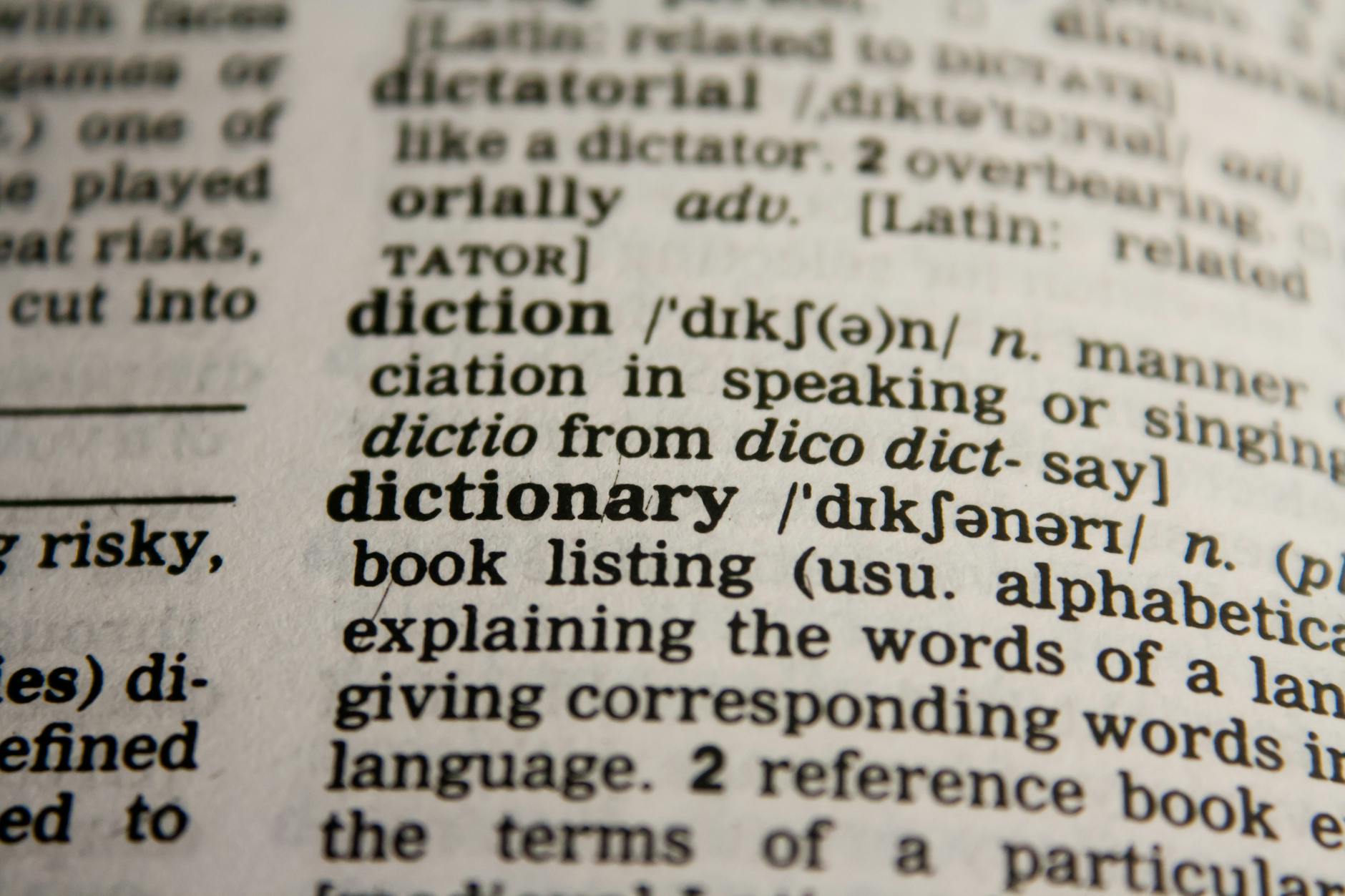
What makes this particularly interesting from an information-systems perspective is that both sides are, in a narrow technical sense, correct about different things. Language is simultaneously descriptive and prescriptive; a word can accurately communicate what something is like while also carrying implications about what something is made of. The tension is not resolvable by appeal to dictionary definitions, because the dictionaries themselves are contested — and because the parties contesting them have powerful material interests in the outcome.
Why Technologists and Developers Should Care About This
It might seem like a long way from Brussels food labelling debates to the concerns of a software engineer or a product manager at a tech company. It is not. The EU meat terminology proposal is, at a structural level, closely analogous to several fights that have roiled the technology industry in recent years.
Consider the ongoing war over what "artificial intelligence" means. As explored in our coverage of the challenge to stop saying "AI" for machine learning and LLMs, the word "AI" has been stretched to cover everything from a basic decision tree to a frontier large language model — creating marketing clarity for vendors and conceptual chaos for everyone else. Just as the meat industry argues that "burger" should mean something specific and bounded, a growing cohort of technical communicators argues that "AI" has been so promiscuously applied that it no longer reliably communicates anything. Both disputes are, at root, about who has the authority to fix the meaning of a word, and what interests are served by fixing it one way versus another.
The "open source" label has gone through similar turbulence. The Open Source Initiative maintains a formal definition; the market often operates on a much looser one. When companies release models under licences that restrict commercial use or fine-tuning, they frequently still claim the "open source" label — which is either a bold redefinition or a straightforward misappropriation of terminology, depending on who you ask. As we discuss in our look at how "AI" became the dominant label despite meaning less and less, the side with better marketing often prevails in these fights regardless of definitional accuracy.
For developers specifically, terminology drift has concrete, measurable costs:
- When a framework's documentation uses "serverless" to mean three different things across three versions, debugging becomes significantly harder and on-call escalations increase.
- When a cloud provider calls something "free tier" while burying cost-trigger conditions in supplementary terms, engineers get surprised by invoices — a problem that compounds at enterprise scale.
- When a government regulation defines "automated decision-making" in a way that captures some ML systems but not others, compliance teams must make expensive judgment calls that vary by jurisdiction and legal interpretation.
- When a security vendor describes a product as "zero trust" without meeting any recognised architectural definition of the term, procurement decisions are made on false premises.
Precise terminology is not pedantry. It is load-bearing infrastructure for every contract, codebase, and compliance framework built on top of it.
The Broader Pattern: Incumbents, Language, and Market Control
One of the clearest patterns in terminology disputes — across food, technology, finance, and medicine — is that established industries tend to favour restrictive terminology standards, while challengers tend to favour expansive or descriptive ones. This is not a coincidence. Incumbents have already built their products, supply chains, and brand equity around existing terms. If a new entrant can borrow the vocabulary without meeting the traditional definition's requirements, the incumbent loses a form of competitive moat that required no ongoing innovation to maintain.
This dynamic helps explain why the EU meat terminology proposal has found such consistent support among traditional agricultural lobbies even after the 2021 parliamentary defeat. Each new regulatory vehicle — whether a Common Agricultural Policy revision, a food labelling reform, or a sustainability framework — presents another opportunity to re-litigate the vocabulary question. The goal is not necessarily to win a single decisive vote; it is to keep the question open, raise costs and uncertainty for plant-based producers, and eventually secure a favourable ruling through accumulated procedural pressure. The French national decree of 2022 is the clearest expression of this strategy: even a suspended decree imposes compliance costs and legal uncertainty on producers during the years it takes to resolve.
Technologists will recognise this strategy. It resembles the way legacy telecom operators have historically engaged with internet regulation: not by winning a single argument, but by ensuring that definitional ambiguity persists long enough to slow competitors, shape investment decisions, and buy time for incumbents to adapt or lobby for carve-outs. The lesson is consistent across sectors: terminology proposals are rarely purely technical documents. They are political instruments that happen to be written in the grammar of standards bodies and regulatory annexes.
Parallel Cases Worth Watching
- "Lab-grown" vs. "cultivated" vs. "cell-based" meat: A separate but closely related EU and US regulatory question over what to call animal cells grown outside a living animal. In the EU, cultivated meat would be assessed under the Novel Food Regulation; in the US, the FDA and USDA issued a joint framework for regulating cultivated meat and poultry. Each proposed term carries different consumer connotations and different implications for labelling and safety-assessment pathways.
- "Artisanal" and "craft" in food and beverage: Terms that began as meaningful descriptors of small-batch, traditional production and were progressively diluted by industrial producers — including large breweries that created nominally independent "craft" sub-brands — until they lost much of their communicative value.
- "Smart" in consumer electronics: A label now applied to almost any device with a wireless chip, making it nearly useless for distinguishing genuinely adaptive systems from marketing gloss. No regulatory body has yet attempted to define it comprehensively.
- "Secure" in cybersecurity marketing: A term so widely claimed by vendors of products with known vulnerabilities that many practitioners treat its presence in marketing copy as a weak signal rather than a meaningful guarantee. This is a widely held practitioner view rather than a formally documented finding.
- "Net zero" in corporate sustainability: A commitment term that lacks a single universal legal definition, enabling a spectrum of claims ranging from scientifically grounded carbon accounting to what critics describe as accounting sleight of hand — a terminology gap that regulators in the EU, UK, and US are actively working to close through anti-greenwashing rules.
What Happens When Terminology Proposals Fail — or Succeed
The consequences of how a terminology proposal resolves are rarely confined to the immediate dispute. When the EU reserved dairy terms under Regulation 1308/2013 — and the CJEU affirmed that reservation in TofuTown — the plant-based beverage industry adapted: "oat drink," "almond beverage," and "soy alternative" became standard European labels. The industry did not collapse — it grew substantially over the subsequent decade, with the European plant-based food market reaching multi-billion-euro annual retail sales by the early 2020s according to industry trackers such as the Good Food Institute Europe. Consumers adjusted. But the episode did establish that the EU was willing to use terminology regulation as a substantive market-shaping tool, not merely a housekeeping measure, and that precedent remains available to any future Commission that chooses to invoke it.
A successful EU meat terminology proposal — one that genuinely restricted plant-based producers from using "burger," "sausage," and related terms — would impose real and unevenly distributed costs. Rebranding at scale is expensive, particularly for smaller producers who lack the marketing budgets of the sector's largest players. It would also require a period of consumer re-education in markets that have already settled into comfortable usage of terms like "veggie burger." Whether those costs would be justified by a genuine consumer-protection benefit is, to put it mildly, disputed — much of the available consumer research finds limited evidence that such terms mislead shoppers about product contents.
A failed proposal — as happened in 2021 — does not resolve the underlying tension. It means the question remains live, that regulatory uncertainty persists, and that companies operating in the space must continue to budget for compliance risk across multiple potential outcomes simultaneously. For startups and scale-ups in the alternative-protein space, that uncertainty is not merely inconvenient; it affects investment timelines, go-to-market strategies, the geographic sequencing of product launches, and the willingness of retailers to commit shelf space to categories whose labelling may be disrupted mid-contract.
Key Takeaways
- Terminology proposals are policy instruments: Whether in food regulation, software standards, or AI governance, what things are called shapes what they can do commercially, legally, and culturally. The vocabulary is the policy.
- The EU meat terminology debate is structurally unresolved: Despite the European Parliament's rejection of the "veggie burger ban" amendments in October 2021, the question continues to be re-litigated through successive regulatory vehicles and national-level decrees.
- National action has already begun: France's 2022 decree — later suspended and then revised in 2024 — shows that member states are willing to act unilaterally, creating a patchwork of terminology rules that raises compliance complexity regardless of any EU-level resolution.
- Incumbents systematically favour restrictive terminology: Locking vocabulary to established product categories is a durable competitive moat that requires no innovation to maintain — only lobbying.
- Consumer confusion is the stated justification, and its strength is contested: Much of the available consumer-comprehension research does not support the claim that "veggie burger" meaningfully misleads shoppers; critics argue the restriction's primary beneficiaries are incumbent producers, not consumers.
- The pattern repeats across tech: "AI," "open source," "serverless," "net zero," and "secure" are all undergoing versions of the same fight — between precise, bounded meanings and expansive, marketing-friendly ones.
- Regulatory uncertainty has real, asymmetric business costs: Unresolved terminology questions force companies to hedge across multiple compliance scenarios, and those costs tend to fall disproportionately on challengers rather than incumbents.
- Language is infrastructure: Every system built on top of ambiguous terminology inherits that ambiguity — in code, in contracts, in consumer expectations, and in the regulatory frameworks that govern all of them.
What Comes Next
The EU Legislative Pipeline
The EU's farm-to-fork and food labelling reform agenda is ongoing, and the meat terminology question is unlikely to be permanently settled by any single vote. Watch for it to re-emerge in the context of sustainable food systems and food labelling reform, where political coalitions — between environmental groups, traditional agricultural lobbies, and consumer-protection advocates — are complex enough that terminology riders can be attached to otherwise uncontroversial measures. The Commission's periodic reviews of Regulation 1308/2013, combined with pressure from member states that have already moved unilaterally, create multiple vectors through which the question can return to active debate within any given legislative cycle.
The Technology Parallel
For the technology sector, the food labelling fight offers a useful preview of how AI terminology governance may eventually unfold: slowly, iteratively, through procedural accumulation rather than decisive rupture. The EU AI Act, which entered into force in 2024, defines "AI system" in terms that will be contested and refined through implementing acts, technical standards from bodies such as CEN-CENELEC, and case-by-case enforcement decisions — much the same pattern seen in food terminology. Each of those sub-decisions is a terminology proposal in miniature, and each will be contested by parties with material interests in the outcome.
The Habit Worth Developing
Paying attention to who proposes terminology standards, and why, is one of the more underrated habits a technically literate person can develop. The question to ask of any terminology proposal — in food, in software, in finance, or in AI governance — is not only "is this definition accurate?" but also "who benefits from this particular way of drawing the boundary, and who bears the cost?" Those questions rarely appear in the text of the proposal itself. They have to be read in the context of who is lobbying for it, who is opposing it, and what market structures would be reinforced or disrupted by each possible resolution. That is what makes a terminology proposal worth taking seriously — and what makes it, in the end, never just about words.
Topics
Sources
Comments(0)
No comments yet. Be the first to share your thoughts.
Join the conversation
Your email stays private and comments are reviewed before appearing.


