French firefighters face 'pyrocumulonimbus' for first time
French firefighters battling a massive wildfire in southwest France encountered a phenomenon that fire scientists say had not previously been recorded in
Researched and drafted with AI assistance, then screened by automated editorial checks before publishing. How we work.

French firefighters battling a massive wildfire in southwest France encountered a phenomenon that fire scientists say had not previously been recorded in the country: a pyrocumulonimbus — a "fire cloud" so powerful it can generate its own weather system, spawn lightning, and cause surrounding vegetation to ignite. According to reporting attributed to France 24 and AFP, the event marks a threshold that fire specialists have long feared for Europe: a fire-behavior category once associated almost exclusively with Australia and Canada being observed on French soil, with crews on the front lines describing a force they cannot fight by direct attack.
| At a Glance | |
|---|---|
| Location | Southwest France (Bordeaux region) |
| Event | Pyrocumulonimbus reported as a first in French firefighting experience |
| People displaced | Reported as more than 300,000 across France and Spain |
| Official status | "Operational impossibility" — FNSPF spokesman |
| Previous precedent | Australia, Canada; not previously recorded in Europe |
| State response | President Macron reported to have mobilized the military |
A Fire Cloud Over France: What Happened
According to the AFP-sourced reporting, a large wildfire threatening the Bordeaux region produced a pyrocumulonimbus — a self-sustaining, fire-generated thunderstorm cloud formally classified by meteorologists as a cumulonimbus flammagenitus. Such formations are rare in Europe, and French firefighters had not encountered one in an operational context. Until this event, pyrocumulonimbus formations had been documented almost exclusively in wildfire-prone Australia and North America, and in connection with major volcanic eruptions.
Scientists at NASA have used the vivid label "fire-breathing dragon of clouds" to describe pyrocumulonimbus formations in their public communications. The phrase captures the extreme end of what fire can do to the atmosphere, crossing from a ground-level combustion event into a self-amplifying atmospheric system. For French firefighters — already stretched across a country where wildfire risk can exist simultaneously in multiple regions — the appearance of such a cloud above southwest France represents a qualitative change in the nature of the threat.
More than 300,000 people in France and Spain were reported to have evacuated their homes during the wider wildfire crisis affecting both countries. French President Emmanuel Macron was reported to have mobilized the military and pledged that France would "rebuild" the devastated areas, describing the crisis as unprecedented. Casualty and displacement figures in active wildfire events are frequently revised, and these numbers reflect the reporting available at the time; the displacement total spans events across the region rather than a single fire.
The Science: How a Wildfire Becomes Its Own Weather System
Understanding why a pyrocumulonimbus matters so profoundly requires a grasp of the physics involved. Lieutenant Colonel Éric Brocardi, spokesman for France's National Firefighters Federation (FNSPF), described the mechanism to AFP:
"The rise in ground temperature at the heart of the blaze is so extreme that the intense heat surges upward in a column, meeting cooler air masses at the top. This contact creates a pyrocumulonimbus — or fire cloud — though unfortunately one devoid of moisture. This smoke cloud generates its own weather system, causing anything in its path to spontaneously combust."
The sequence generally unfolds in distinct, escalating stages:
- Superheating: The wildfire raises ground-level air temperatures to an extreme degree across a large area, creating an enormous heat reservoir at the surface.
- Rapid convective ascent: Superheated air rises in a powerful thermal column — the same basic mechanism behind ordinary thunderstorm development, but driven by fire heat rather than solar radiation alone.
- Cloud formation: As the rising column meets cooler air masses at altitude, it forms a turbulent, billowing cloud mass. Unlike a standard cumulonimbus, this cloud carries dense smoke particulates rather than significant moisture — making it electrically active but rain-poor.
- Internal wind generation: The cloud system begins producing its own localized wind patterns that can shift direction constantly, bearing little reliable relationship to prevailing ambient winds.
- Lightning: As the system grows, electrical charge separation occurs within the smoke-laden cloud mass, producing lightning strikes. As Brocardi noted, "Lightning forms within the cloud, striking the embers on the ground and further fuelling the fire." He also described the cloud producing "a low, rumbling sound" — an audible sign of the electrical activity building overhead.
- Spontaneous ignition: Radiant heat, shifting superheated surface winds, and lightning strikes can combine to ignite unburned material in the fire's path without direct flame contact — effectively creating new ignition points in unpredictable locations beyond the fire's visible perimeter.
Why This Makes Standard Firefighting Tactics Ineffective
A conventional wildfire spreads in a broadly conical pattern, driven by prevailing wind direction. Experienced crews read that pattern, cut firebreaks ahead of the advancing front, and conduct controlled back-burns. A pyrocumulonimbus undermines those assumptions. Because the fire cloud can generate its own winds — winds that "constantly shift direction," in Brocardi's words — the blaze can spread in multiple directions, developing multiple fire fronts that are difficult to anticipate or encircle.
"We don't know how the blaze will spread; the fire front is constantly shifting. We cannot fight it directly. It's a David-versus-Goliath scenario: the idea is that, at some point, we'll find a weak spot and strike there."
— Lt. Col. Éric Brocardi, FNSPF
This is the operational reality described by the FNSPF: a fire that is, in the short term, essentially resistant to direct assault.

Conventional Fire vs. Pyrocumulonimbus Fire: A Comparison
| Characteristic | Conventional Wildfire | Pyrocumulonimbus Wildfire |
|---|---|---|
| Spread pattern | Conical, broadly predictable | Omnidirectional, unpredictable |
| Wind behavior | Driven by ambient/prevailing winds | Can be self-generated, shifting direction |
| Number of fire fronts | Typically one primary advancing front | Multiple simultaneous fronts possible |
| Lightning risk | Dependent on external weather systems | Self-generated lightning can strike ground, igniting new fires |
| Spontaneous ignition risk | Low — spread by direct flame contact | High — radiant heat and lightning create remote ignitions |
| Direct attack feasibility | Often possible with sufficient resources | Described as "operational impossibility" (FNSPF) |
| Crew safety posture | Offensive with managed risk | Defensive — strategic retreat required |
| Audible warning signs | Crackling, ambient wind noise | Low, rumbling sound from internal electrical activity |
| Geographic precedent in Europe | Common across the continent | Previously unrecorded; reported as a first in French experience |
"Operational Impossibility": What French Firefighters Are Doing
In language that is both technically precise and candid, Lt. Col. Brocardi described French firefighters reaching a point of "operational impossibility" — an acknowledgment that the conventional duty to attack and suppress had shifted toward a duty to protect and wait for an opening. The strategy, as he described it, is defensive.
"The situation on the ground is defensive rather than offensive; it is a war-like scenario where we are under constant bombardment and must get everyone to safety."
The military metaphor is instructive. In warfare, a force that cannot win a direct engagement withdraws to defensible positions, preserves its strength, and probes for a flank. French firefighters, in Brocardi's account, are applying similar logic: protect life and property where feasible, retreat when necessary, and search for the "weak spot" he described — potentially a geographic chokepoint, a pre-existing fuel break, or a shift in atmospheric conditions that momentarily disrupts the cloud system's self-reinforcing dynamics.
The Scenarios That Could End It
Brocardi outlined a limited set of conditions that could bring a fire of this type under control:
- Heavy, sustained rainfall: Not a passing shower. According to Brocardi, it would need to "pour heavily for three days" to suppress a fire of this scale and volatility. Under a pyrocumulonimbus, even the cloud's own meager moisture contribution is described as insufficient to dampen the blaze.
- Geographic containment: Steering the fire — through strategic backfires or deliberate use of terrain features — toward a location where it exhausts its available fuel. The sea was cited as one such terminal boundary capable of halting the fire's advance.
Neither option is quick, and neither is certain. That uncertainty is the essence of the "David-versus-Goliath" framing Brocardi used — not despair, but an unsentimental reckoning with the opponent's scale and the patience the strategy demands.
A Candid Acknowledgment of Powerlessness
"We realise we are facing a situation where we are powerless. Yet, that powerlessness leaves no room for despair."
This degree of institutional candor from a senior firefighting spokesman is itself significant. European emergency services culture has historically emphasized forward capability and aggressive action. Publicly describing "operational impossibility" signals that the FNSPF is prioritizing crew safety and public honesty over institutional optics — and that it recognizes this as a category of event that may require new vocabulary, new doctrine, and substantially updated training frameworks. It is framed not as a concession of failure, but as a recalibration of what success looks like when the physics of the situation rule out direct attack.
Why France, and Why Now
Pyrocumulonimbus events have been well-documented in Canada and Australia for years. The 2019–2020 Australian "Black Summer" fires produced multiple documented pyrocumulonimbus formations that propelled smoke plumes into the stratosphere — plumes detected by satellites and studied for their effect on stratospheric aerosol levels. In Canada, the record-breaking 2023 wildfire season, in which official estimates put the area burned at well over 15 million hectares, generated similar convective fire phenomena. Brocardi explicitly invoked this precedent: "While this type of fire occurs regularly in Canada and Australia, it is unprecedented in France."
The question of why France now does not have a single answer in the available reporting, but the contextual signals are clear. A pyrocumulonimbus requires a fire large enough, hot enough, and sustained enough to generate a convective column — conditions typically involving a confluence of heavy accumulated fuel load, critically low humidity, high ambient temperatures, and sufficient geographic scale for the thermal column to reach altitude before dispersing. Southwest France, including the dense pine forests and dry scrublands around Bordeaux, has experienced progressively intensifying fire seasons in recent years. That this threshold appears to have been crossed suggests that atmospheric and fuel-load conditions once associated primarily with Australia and Canada can now occur in Western Europe.
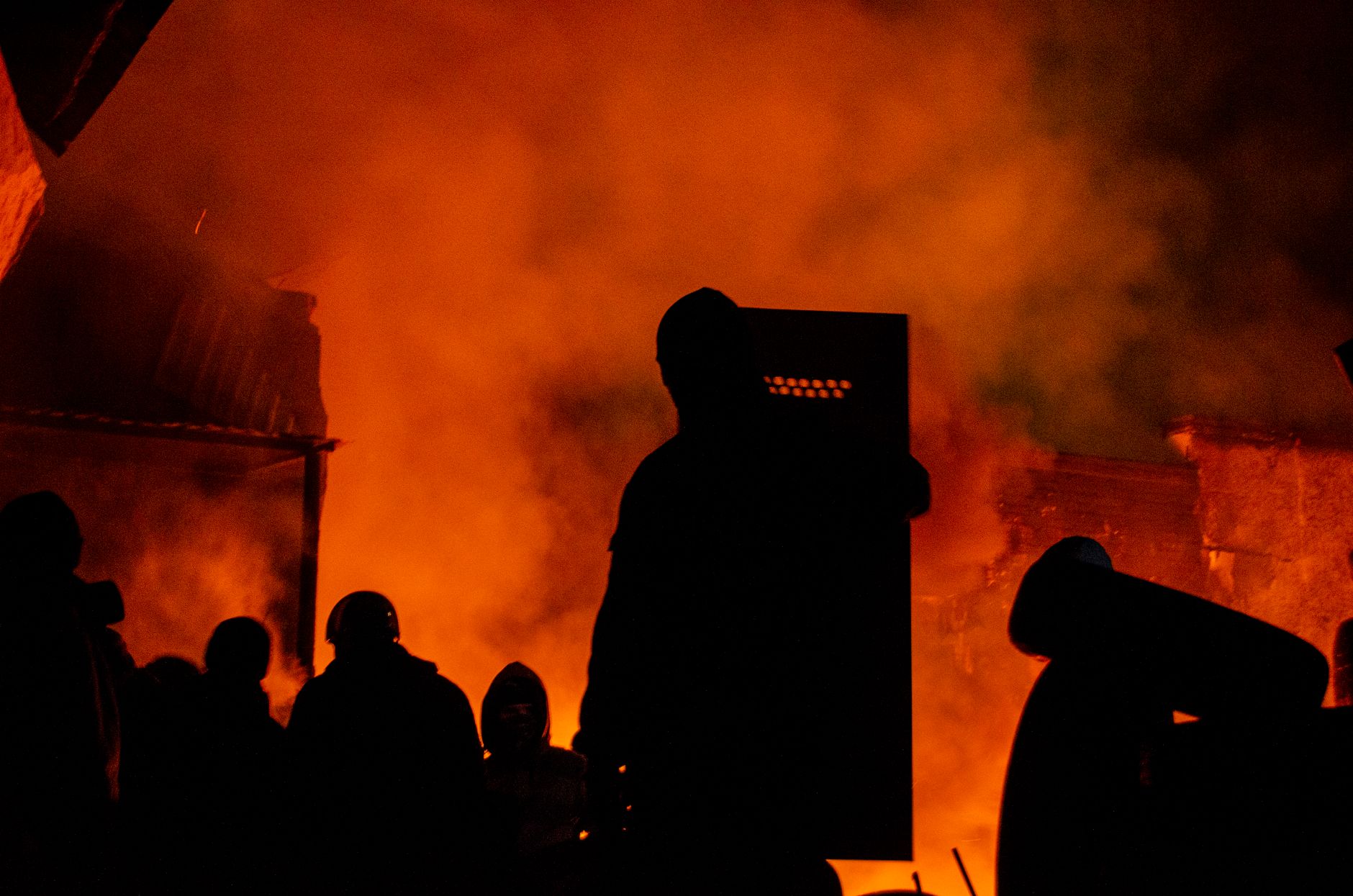
Brocardi also identified the resource constraint this reality imposes: "Not all firefighters from across France can simply converge here, because the risk exists everywhere. We have to hold the line." France is not managing a single catastrophic event that can be addressed by concentrating all national assets at one point; it is managing elevated wildfire risk simultaneously across its territory — a strategic posture, not merely a tactical one.
French Firefighters in the Public Eye: Context Beyond the Wildfire
The corps of French firefighters — the sapeurs-pompiers — holds a distinctive place in French civil society. Their recognizable equipment and uniforms have become symbols of national service, and the annual firefighters' fundraising calendar (Calendrier des Pompiers), sold door to door by local crews, is a long-standing cultural institution that has helped sustain public goodwill toward the service.
French firefighters have also been visible in the public sphere for reasons rooted in labor grievance rather than emergency response. Disputes over pay, staffing levels, and working conditions have fueled recurring strikes and protests in recent years. Some demonstrations, widely covered in French media, involved tense confrontations with riot police — a striking image given the unusual sight of two uniformed public services in direct conflict. These disputes have repeatedly centered on firefighters' warnings that the service is understaffed, underfunded, and stretched thin. AIBites has not independently verified accounts of specific protest tactics attributed to individual demonstrators, and readers should treat any such claims with caution absent primary sourcing.
None of that public familiarity prepared the institution or the French public for a fire-behavior category that had, until now, appeared in Europe's operational records rarely if at all. The pyrocumulonimbus event places those underlying resource and staffing disputes in sharper relief: the service being asked to confront a new category of extreme fire event is the same service that has spent years warning that it is under strain.
Doctrine, Training, and the Road Ahead for French Fire Services
The emergence of a pyrocumulonimbus over French soil carries implications that extend well beyond this single fire. For the FNSPF and France's broader emergency management architecture, this moment is likely to prompt review across multiple dimensions:
- Operational doctrine: Current suppression protocols are built around conical, wind-driven fire behavior. Pyrocumulonimbus fires point to the value of pre-established "strategic retreat" frameworks with clear triggers, predetermined escape corridors, and unambiguous authority chains for the decision to withdraw — the kind of formalized go/no-go criteria that Australian fire agencies have developed over decades of convective fire experience.
- Crew training: French firefighters are trained for high-intensity scenarios, but conditioning crews to recognize the auditory and visual signatures of pyrocumulonimbus formation and to execute disciplined retreat rather than advance is a specific and counterintuitive discipline. Canadian and Australian fire agencies have developed crew-level protocols for these conditions that France may need to study and adapt to European terrain and institutional culture.
- Atmospheric monitoring integration: Pyrocumulonimbus formation can, in some cases, be detected in its early stages through Doppler radar returns and satellite thermal imaging. Australian fire agencies have pioneered real-time integration of Bureau of Meteorology data into tactical fire command. Embedding equivalent meteorological intelligence into French fire command — linking radar and satellite feeds directly to incident commanders — may become a national priority.
- Resource pre-positioning: If France is entering an era in which pyrocumulonimbus-scale events are possible across multiple regions simultaneously, the traditional mutual aid model — where crews and equipment converge from unaffected areas — may prove structurally inadequate. Pre-positioned heavy air tankers, aerial water-bombing assets (including Canadair CL-415 amphibious aircraft, already used by the French civil security air fleet), and dedicated convective-fire rapid response teams could become strategic necessities rather than supplementary options.
- Military-civilian interoperability: The reported mobilization of the French military signals that civilian fire services alone may not be considered sufficient for an event of this magnitude. Formalizing military-civilian interoperability frameworks for extreme wildfire scenarios — covering logistics, communications architecture, and shared aerial asset command — would be a logical institutional response.
- European coordination: If France has now crossed the pyrocumulonimbus threshold, neighboring countries with comparable forest types and climate trajectories — Spain, Portugal, Italy, and Greece among them — may face the same eventual crossing. The European Forest Fire Information System (EFFIS) provides a shared monitoring platform; a shared convective-fire doctrine and mutual rapid-response capacity built for self-reinforcing fire systems could complement it.
Key Takeaways
- A reported first for France: A wildfire in southwest France, approaching the Bordeaux region, generated a fire cloud reported as unprecedented in French firefighting experience.
- Self-sustaining atmospheric system: The pyrocumulonimbus can generate its own shifting winds, its own lightning (which can ignite new fires on the ground), and cause spontaneous combustion in its path — largely without external weather input.
- Direct suppression is described as impossible: The FNSPF spokesman described "operational impossibility" — crews cannot attack the fire directly and adopt a defensive, protective posture while seeking a tactical opening.
- Two containment scenarios: Roughly three days of heavy sustained rain, or steering the fire toward the sea to exhaust its fuel, were the two plausible end-states Brocardi outlined.
- Large-scale displacement: More than 300,000 people were reported displaced across the France–Spain wildfire crisis, illustrating how rapidly such fires can outpace even large-scale evacuation planning.
- Previously an Australian and Canadian phenomenon: The apparent arrival of this fire-behavior category in Western Europe signals a possible qualitative shift in regional wildfire risk.
- Military mobilization reported: The French state's response — including reported military deployment and presidential pledges to rebuild — indicates recognition that this event exceeds normal emergency management assumptions.
- Doctrine, training, and monitoring gaps exposed: French fire services may need to adapt suppression protocols, atmospheric monitoring integration, and crew training to account for convective fire behavior — drawing on Australian and Canadian expertise.
What comes next will depend on both immediate atmospheric conditions over southwest France and the longer-term institutional response. If rain arrives in the volume and duration Brocardi described, the immediate crisis may ease — but the strategic question will remain: how does France restructure its wildfire doctrine, resourcing, and crew training for an era in which pyrocumulonimbus events may no longer be someone else's problem? Australia and Canada have spent decades accumulating hard-won expertise in convective fire behavior, at a cost measured in lives, structures, and landscape. France — and, by extension, the broader European firefighting community — now faces the task of absorbing those lessons and embedding them across every layer of the system, from crew-level protective equipment to the atmospheric data feeds flowing into national emergency command. A reported first pyrocumulonimbus in French firefighting history is, in the most precise sense, a warning. How the institution responds will help determine whether the next one — if it comes — finds France better prepared, or still catching up.
Topics
- french firefighters
- french firefighters face
- french firefighters face pyrocumulonimbus first time
- french firefighters protest
- french firefighters vs police
- french firefighters fighting police
- french firefighters set themselves on fire
- french firefighters helmet
- french firefighters light themselves on fire
- french firefighters calendar
- french firefighters uniform
- french firefighters strike
Sources
Comments(0)
No comments yet. Be the first to share your thoughts.
Join the conversation
Your email stays private and comments are reviewed before appearing.


