John Deere Owners Win the Right to Repair: Inside the FTC Settlement That Changes Everything
John Deere owners get right to repair under a binding FTC settlement, gaining access to Service ADVISOR tools, diagnostics, and manuals once locked to
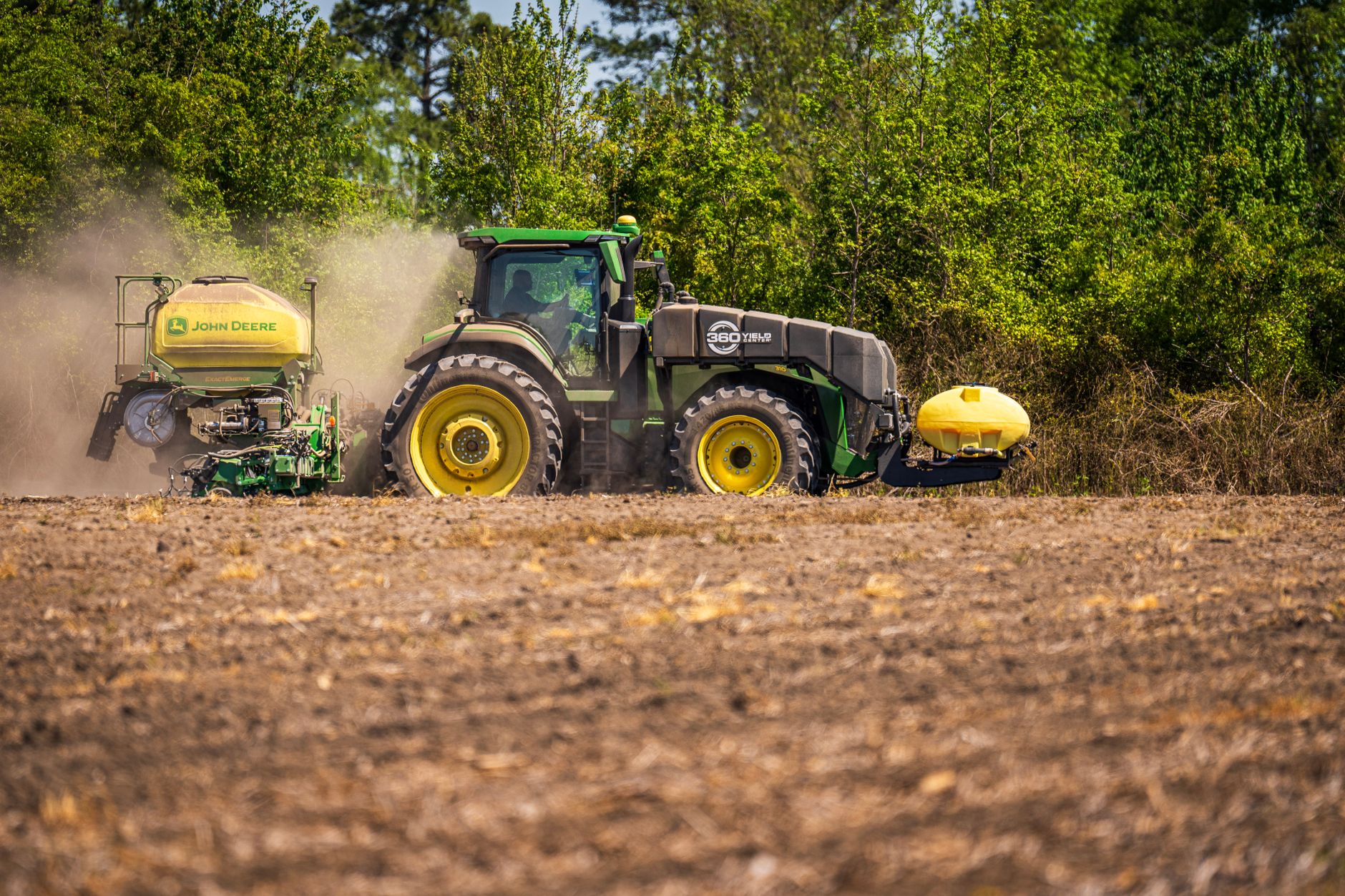
The Federal Trade Commission reached a landmark consent agreement with John Deere & Company, announced in January 2025, that formally grants farmers and independent mechanics the right to repair agricultural equipment — ending years of bitter disputes between the company and the people who depend on its machines to harvest their livelihoods. The agreement represents one of the most significant right-to-repair victories in American history, and it carries implications that stretch far beyond the fields where Deere's green-and-yellow tractors work.
For a tech-savvy audience, this story is about more than tractors. It is about who controls the software stack running inside nearly every complex piece of machinery on earth, and whether manufacturers can use digital locks to turn ownership into a subscription relationship — where you buy the hardware but rent the right to fix it. The FTC's action signals a fundamental shift in how federal regulators view repair restrictions: as an anticompetitive practice rather than merely a business model choice, actionable under existing law without waiting for Congress to act.
Note on terminology: This article focuses on the FTC consent agreement announced in January 2025. It is distinct from the earlier January 2023 Memorandum of Understanding (MOU) between Deere and the American Farm Bureau Federation, which was a voluntary, non-binding commitment. Understanding the difference between those two documents is essential context for evaluating what has actually changed for John Deere owners and independent repair shops.
What the FTC Settlement Actually Requires
The consent agreement between the Federal Trade Commission and Deere & Company compels the manufacturer to provide farmers and independent repair shops with the tools, software, and documentation they need to diagnose and fix their own equipment. That means access to repair manuals, diagnostic codes, and the proprietary software interfaces — particularly Deere's Service ADVISOR platform — that Deere had previously reserved exclusively for its authorized dealer network.
Service ADVISOR is Deere's proprietary diagnostic and repair platform. Authorized dealers use it to access fault codes, service history, equipment configuration data, calibration routines, and software update tools. Access had been restricted to the dealer network under licensing agreements, meaning independent mechanics and equipment owners themselves could read only a fraction of the diagnostic data their own machines generated. This is the core technical chokepoint the settlement addresses.
In practical terms, John Deere owners — from a corn farmer in Iowa running a single combine to a large commercial operation managing a fleet of planters — will no longer be legally or technically blocked from performing repairs beyond the most superficial maintenance. Critically, the FTC consent agreement is a legally binding instrument monitored by the commission, not a voluntary promise. Violations can trigger civil penalties of tens of thousands of dollars per day per violation under FTC Act enforcement mechanisms (the FTC's maximum per-violation civil penalty is adjusted annually for inflation under the Federal Civil Penalties Inflation Adjustment Act), providing genuine enforcement teeth that the earlier Farm Bureau MOU entirely lacked.
Analysis: The right-to-repair movement has long argued that when a manufacturer uses software and digital locks to restrict repair, it is not protecting intellectual property — it is weaponizing it against the people who paid full price for a product. The FTC's consent agreement with Deere gives that argument the force of federal law, backed by civil penalty exposure and ongoing commission monitoring.
The FTC's involvement signals that federal regulators are increasingly willing to treat repair restrictions as an anticompetitive practice under existing antitrust and consumer protection authority — including the Magnuson-Moss Warranty Act — without requiring new legislation. This framing is consequential: it means future enforcement can move as fast as the FTC chooses to act, rather than waiting on legislative calendars.
John Deere's public response to the settlement was measured. A company spokesperson characterized the agreement as consistent with commitments Deere said it had already been pursuing voluntarily, while emphasizing that the company would work constructively with the FTC on implementation. Critics noted that this framing understated how substantially the consent agreement's binding obligations exceed what Deere's voluntary MOU had delivered. The company did not admit to any unlawful conduct — a standard feature of consent agreements — but accepted legally enforceable obligations that represent a material shift in its relationship with customers and independent repair businesses.
A Decade of John Deere Ownership Controversy
To understand why this settlement matters, you need to trace the arc of John Deere ownership controversy that built over the past decade. As Deere modernized its equipment with embedded computers, GPS guidance systems, and sophisticated telematics beginning in the early 2010s, the company simultaneously tightened control over the software layer running those systems. By the mid-2010s, a farmer who bought a $400,000 combine could find that a sensor fault code would immobilize the machine until an authorized dealer technician arrived — sometimes days later, in the middle of a narrow harvest window when every hour translates into thousands of dollars of potential loss.
The financial stakes in agriculture are extreme. Harvest delays caused by equipment downtime can cost thousands of dollars per hour when crops are at peak ripeness and weather windows are closing. Farmers in the American Midwest documented cases where simple electronic faults — issues that a competent mechanic with the right diagnostic software could resolve in an hour — required waiting for a dealer visit because the software to clear error codes was locked behind Service ADVISOR. These documented cases circulated widely in John Deere owners forums, agricultural trade publications, and rural news outlets, and they became the catalyst for broader advocacy.
The Software-as-Control Playbook
Deere was not unique in this approach. The auto industry pursued similar strategies, which is why Massachusetts voters passed a landmark automotive right-to-repair law via ballot initiative in November 2020. That law has faced significant legal challenges — auto manufacturers sued to block implementation, and the state's data-sharing provisions remained in federal court dispute for years — which is precisely why advocates argued that voluntary action and state legislation alone were insufficient and that federal enforcement was necessary.
Medical device manufacturers, agricultural equipment companies, and consumer electronics makers have all used software-based restrictions to maintain what critics call "repair monopolies." John Deere became the most prominent example because the consequences of equipment downtime in farming are so visceral, so well-documented, and so easy for non-farmers to understand intuitively: a farmer cannot harvest a ripe crop because a software lock is preventing a repair.
Members of John Deere owners forum communities and advocacy groups spent years sharing workarounds, importing Eastern European diagnostic software that could unlock certain functions, and lobbying state legislatures. By 2022, at least two dozen states had introduced or were actively considering some form of right-to-repair legislation across agricultural, automotive, and consumer electronics categories. Colorado became the first U.S. state to pass agricultural-equipment-specific right-to-repair legislation when Governor Jared Polis signed HB23-1011 into law in April 2023, explicitly covering manufacturers like Deere, CNH Industrial, and AGCO and requiring them to make tools and documentation available to farmers and independent shops.
The pressure was building from multiple directions simultaneously — state legislatures, farmer advocacy organizations, rural repair shops, and international communities including the John Deere owners club UK and affiliated European chapters, which faced similar restrictions in European markets under analogous dealer agreements. European farm organizations coordinated with U.S. counterparts to push for concurrent relief, and their advocacy contributed to momentum behind the EU's own right-to-repair framework described later in this article.
The 2023 Voluntary MOU: Why It Was Not Enough
Before the FTC consent agreement, Deere had attempted to manage the regulatory and reputational pressure through a voluntary approach. In January 2023, the company signed a Memorandum of Understanding with the American Farm Bureau Federation, pledging to expand access to diagnostic software, repair documentation, and parts over time. The announcement was framed by Deere as a demonstration that manufacturers could self-regulate without federal intervention.
Critics — including FTC commissioners, independent repair advocates, and the very farm organizations the MOU was meant to satisfy — quickly identified its structural weaknesses:
Non-binding: The MOU created no legal obligation. Deere could modify or walk away from commitments without penalty.
No defined timelines: The document described goals rather than deadlines, making accountability impossible.
No scope definition: Which equipment models, which diagnostic functions, and which software versions would be covered was never clearly specified.
No enforcement mechanism: No third party had authority to verify compliance or impose consequences for non-delivery.
No warranty protection: The MOU did not explicitly prevent Deere from voiding warranties when farmers or independent shops performed repairs using non-dealer resources.
The FTC's decision to proceed with a formal consent agreement, rather than accepting the MOU as sufficient, reflects the commission's explicit conclusion that voluntary commitments in this sector had not delivered adequate access and that legally binding, monitored, and enforceable obligations were required. The consent agreement supersedes and substantially exceeds the MOU in scope, enforceability, and specificity.
The Role of the FTC and the Regulatory Backstory
The FTC did not arrive at this settlement overnight. In July 2021, President Biden signed an executive order that explicitly called on the FTC to address anticompetitive repair restrictions, naming agricultural equipment as a priority sector. The commission subsequently voted to ramp up enforcement under existing statutes, including the Magnuson-Moss Warranty Act, which prohibits manufacturers from voiding warranties simply because a consumer used a third-party part or service provider.
The FTC's position, articulated in policy reports and public statements, was that repair restrictions harm consumers financially, disadvantage independent repair businesses, and ultimately reduce competition. For farmers, the commission noted, these restrictions hit hardest because agricultural equipment is expensive, geographically remote from dealer networks, and time-sensitive in its operational demands. Then-FTC Chair Lina Khan — who led the commission during the investigation and early phases of this enforcement action — and Commissioner Rebecca Kelly Slaughter made public statements characterizing repair restrictions as potential violations of Section 5 of the FTC Act, which prohibits unfair methods of competition. (Khan's tenure as chair ended in early 2025; the consent agreement represents the culmination of the enforcement trajectory she helped initiate.)
The consent agreement is the culmination of that regulatory trajectory. Because it is a consent agreement rather than a litigated judgment, Deere did not admit wrongdoing — a standard feature of this type of settlement. But it is legally binding, subject to FTC monitoring and periodic compliance audits, and backed by civil penalty authority that represents a fundamental shift in the balance of power between manufacturer and customer. The FTC will conduct scheduled compliance reviews and can initiate enforcement action on evidence of non-compliance.
What Changes at the Technical Level
For engineers and technically literate readers, the specifics matter significantly. The settlement requires Deere to make available:
Diagnostic software access: Farmers and independent technicians will be able to use tools functionally equivalent to Service ADVISOR to read fault codes, clear errors, and run diagnostic routines, including access to real-time operational data from connected equipment. The settlement specifies that pricing for this access, if any, must be fair, reasonable, and non-discriminatory — preventing Deere from making access technically available but economically prohibitive.
Full repair documentation: This is the provision directly affecting John Deere owners manuals availability. Full service documentation equivalent to what dealers receive must be made accessible — closing the long-standing gap between consumer-facing John Deere owners manual PDF resources (which covered basic maintenance and operator functions) and the full technical service manuals that dealers possessed, including calibration procedures, wiring diagrams, and parts schematics for all covered equipment.
Parts availability: The settlement addresses restrictions on parts sales to independent repair shops, a secondary chokepoint that frustrated mechanics even when they had the knowledge to perform repairs. Independent shops are explicitly permitted to purchase OEM and compatible aftermarket parts without dealer intermediation or software locks preventing installation.
Software update and calibration tools: Critically, the agreement covers the ability to update firmware and recalibrate software and control units — not merely read existing data. This is significant because modern Deere equipment requires software calibration after many hardware replacements (sensor swaps, control module updates, hydraulic system repairs), and this had been a key restriction point that made "independent repair" technically incomplete even when diagnostic access was partially available.
Warranty protection: The settlement incorporates Magnuson-Moss Warranty Act protections explicitly, stating that Deere cannot void warranties or deny warranty service because a farmer or independent shop performed repairs using documentation and tools provided under the settlement.
Implementation timeline: Deere is required to implement access provisions across its covered product line within defined timeframes set out in the consent agreement, with phased milestones subject to FTC review. Not all access will be available simultaneously from day one — implementation across Deere's full range of equipment generations and software versions is a technically complex task, and the commission has established a monitoring process to verify milestone compliance.
Comparing the Before and After: What John Deere Owners Gain
Capability Before Settlement After Settlement Read full diagnostic fault codes Dealer-only via Service ADVISOR Available to owners and independent shops (phased rollout) Clear error codes and reset systems Dealer-only; required dealer service call Available to owners and independent shops Access full technical service manuals Dealer-only; consumer PDF limited to basic maintenance Full documentation accessible, including calibration and wiring schematics Purchase parts from independent suppliers Restricted or discouraged; software locks could prevent installation Explicitly permitted; no software barriers to parts installation Perform software calibration after hardware repair Required dealer visit; could take days in remote areas Owners and independents can perform with provided tools Warranty protection for independent repair Risk of voiding warranty; Deere could deny coverage Cannot be voided for using independent repair or covered parts Pricing for diagnostic tool access Not applicable (access unavailable) Must be fair, reasonable, and non-discriminatory if fees charged
Every row in this table represents a genuine, documented pain point that farmers and mechanics raised in public comments to the FTC, in state legislative hearings, in farming industry publications, and in John Deere owners forum communities that formed partly to share workarounds and advocacy strategies. Groups including the John Deere owners club UK had been watching the American battle closely, as similar restrictions applied in European markets under analogous dealer agreements. European farm organizations coordinated with U.S. counterparts to push for concurrent relief, and their advocacy contributed to momentum behind the EU's own right-to-repair framework described in the next section.
The John Deere Owners Community: Forums, Clubs, and the Culture of Repair
The right-to-repair fight was not won by regulatory action alone. It was built on years of grassroots documentation, peer knowledge-sharing, and community organizing among John Deere owners of every kind — commercial farmers, smallholders, collectors, and enthusiasts whose attachment to the brand spans generations.
Online John Deere owners forums became critical infrastructure for the movement. Members shared diagnostic workaround methods, documented cases of harvest-time equipment failures and dealer response failures, pooled knowledge about which fault codes corresponded to which hardware issues, and organized political contacts to state legislators. These forums also served as archives: the accumulated record of repair denials, warranty disputes, and dealer wait times that advocacy organizations later presented to the FTC as evidence of systemic harm. The detailed, timestamped documentation assembled in these communities gave regulators a granular picture of real-world impact that abstract policy arguments alone could not have provided.
The John Deere owners club community — including regional clubs across the United States, the John Deere owners club UK, and affiliated European chapters — represents a distinct but overlapping constituency of collectors and enthusiasts who maintain vintage and classic John Deere equipment. For this community, the right-to-repair issue intersects with long-standing traditions of owner maintenance and mechanical self-sufficiency that predate the software-lock era entirely. Many club members had been performing their own repairs for decades and found the introduction of software-based restrictions philosophically and practically incompatible with their ownership culture.
Deere's identity as a brand has always rested on a relationship of practical partnership with farmers — a relationship visible in the John Deere owners edition hat worn at farm shows, the regional owners club gatherings, and the multigenerational loyalty that distinguishes Deere's customer base from more transactional consumer relationships. John Deere ownership is not casual for most of its customers: many are third- or fourth-generation operators whose families have run Deere equipment for decades and who experienced the software-restriction era as a betrayal of an implicit ownership compact. The settlement is, in part, a restoration of the ownership relationship those customers believed they had purchased along with the equipment itself.
The Broader Right-to-Repair Ecosystem This Empowers
The settlement does not exist in a vacuum. It lands at a moment when the right-to-repair movement has achieved a series of victories across sectors, alongside some notable reversals that underline why binding federal enforcement matters.
Apple launched its Self Repair Store program in April 2022, agreeing to sell parts and tools directly to consumers for iPhone self-repair, initially covering iPhone 12 and 13 models. However, according to reporting from repair advocacy organizations and technology press in 2024, Apple moved to wind down the Self Repair Store program, with repair advocates arguing the closure demonstrated the inherent fragility of voluntary manufacturer programs that carry no regulatory mandate and can be discontinued when commercially inconvenient. The Deere settlement, by contrast, imposes binding obligations that cannot simply be discontinued when the manufacturer decides the program is not serving its commercial interests.
The European Union formally adopted the Right to Repair Directive (Directive (EU) 2024/1799), which was published in the Official Journal of the European Union on 23 April 2024. The directive mandates repairability obligations across a range of product categories including smartphones, tablets, laptops, and household appliances, with member states required to transpose the directive into national law within two years of entry into force — meaning full implementation across EU markets is expected by mid-2026. EU farm organizations have simultaneously been pushing for agricultural equipment to be brought under equivalent frameworks, and the FTC settlement with Deere is being cited in those advocacy efforts as a proof of concept for binding manufacturer obligations at the federal level.
Colorado's agricultural right-to-repair law (HB23-1011), signed in April 2023, explicitly covered agricultural equipment manufacturers and remains the most directly comparable state-level action. The FTC consent agreement with Deere is now effectively the federal counterpart to Colorado's law — and establishes a precedent that advocates expect will influence regulatory approaches in other jurisdictions and sectors.
Independent Repair Shops and the Economic Ripple Effect
Beyond individual farmers, the settlement reshapes the economics of agricultural equipment servicing. Independent repair shops — many of them small, rural businesses that are sometimes the only mechanical expertise within a hundred miles of a farm — will now be able to compete for work that was previously locked to Deere's dealer network by software, not by skill or service quality.
This matters because dealer consolidation has been a parallel trend in the agricultural equipment industry over the past two decades. As smaller dealerships have been absorbed into larger regional networks, service response times have lengthened and service costs have risen. The rise of mega-dealerships with territories covering hundreds of square miles has left many rural communities with service response times measured in days rather than hours. Independent shops filled a geographic and economic gap but were hamstrung by their inability to access diagnostic tools and documentation. The settlement removes that barrier and restores competitive pressure on pricing and service availability.
Rural mechanics report anticipating the ability to offer emergency same-day or next-day service in contrast to the multi-day wait times that dealer consolidation has created in many regions. For farmers active in communities ranging from online John Deere owners forums to the John Deere owners club UK, the practical implication is straightforward: competition in repair services will tend to lower prices and improve response times, as it does in any market where artificial barriers to entry are removed.
What Deere's Position Has Been — and What the Settlement Concedes
John Deere's public position had long been that repair restrictions existed for legitimate reasons: safety, emissions compliance, data security, and the complexity of modern equipment that could be damaged by improper software interventions. The company argued that its dealer network provided trained technicians who understood the full system integration of its machines, and that allowing unrestricted access could lead to unsafe modifications, emissions violations, or security breaches in connected equipment systems.
These arguments had some technical merit in the abstract — complex electronic systems can be misconfigured, and emissions control software is regulated under federal law — but they were undercut by the breadth of the restrictions as actually implemented. Blocking a farmer from reading a fault code is not a safety measure. Preventing an independent mechanic from replacing a sensor without dealer involvement is not emissions compliance. The scope of restrictions far exceeded what legitimate safety or compliance concerns would require, a point the FTC's investigation documented in detail.
Deere had previously attempted to satisfy critics through the January 2023 MOU with the American Farm Bureau Federation. As analyzed in the section above, that document proved inadequate on every structural dimension that matters for accountability: it was non-binding, unspecific, unscheduled, and unenforceable. By entering the FTC consent agreement, Deere effectively acknowledges that the voluntary approach did not deliver sufficient access and that federal oversight is now a permanent structural feature of its relationship with independent repair. The company does not admit to illegal conduct — a standard feature of consent agreements — but it accepts legally binding obligations, FTC monitoring, and civil penalty exposure that represent a fundamental shift in the balance of power between manufacturer and customer.
Key Takeaways
Federal enforcement, not just legislation: The FTC used existing antitrust and consumer protection authority to compel Deere, demonstrating that right-to-repair reform can move through regulatory channels faster than through Congress, and that the Magnuson-Moss Warranty Act provides a meaningful existing legal hook for enforcement.
Full diagnostic and documentation access: John Deere owners gain access to service documentation equivalent to dealer technical manuals — closing the long-standing gap between consumer-facing John Deere owners manual PDF resources and the full technical documentation that authorized dealers possessed exclusively.
Software calibration unlocked: The settlement goes beyond reading fault codes to cover firmware updates and software recalibration after hardware repair, which was the key remaining chokepoint that made independent repair technically incomplete even when partial diagnostic access existed.
Fair access pricing required: Any fees Deere charges for access to diagnostic tools or documentation must be fair, reasonable, and non-discriminatory — preventing economic gatekeeping as a substitute for technical gatekeeping.
Civil penalties provide enforcement teeth: Unlike the 2023 MOU, the consent agreement carries civil penalty exposure for violations, making non-compliance materially costly and providing the accountability mechanism the voluntary approach entirely lacked.
Independent shops gain competitive footing: Rural mechanics and repair businesses can now compete for work previously locked to Deere's dealer network, with direct benefits for service pricing, availability, and response times in geographically remote agricultural communities.
A federal precedent is set: The settlement signals to CNH Industrial, AGCO, Kubota, and manufacturers in automotive, medical, and consumer electronics sectors that the FTC treats repair monopolies as actionable anticompetitive behavior under existing law.
Voluntary commitments proved insufficient: Deere's 2023 MOU with the Farm Bureau did not deliver adequate, binding access; federal enforcement was required to establish mandatory standards, timelines, and accountability.
International relevance: The John Deere owners club UK and European farming organizations are monitoring whether similar access provisions will follow under the EU Right to Repair Directive, formally published in April 2024 and now in national transposition with implementation expected by mid-2026.
Data rights remain unresolved: The settlement addresses repair access but does not touch data ownership — who controls the vast operational and agronomic data generated by connected Deere equipment remains a live and consequential dispute that is likely to be the next major front in this regulatory conversation.
What Comes Next for Farmers, Regulators, and the Industry
The immediate priority is implementation. Deere must build out the infrastructure to deliver diagnostic software access and documentation to non-dealer users within the phased timelines set by the consent agreement — a technically complex task given the range of equipment generations, software versions, and hardware configurations across its global product line. Tractors, combines, planters, sprayers, and specialty equipment each have different diagnostic architectures, and making Service ADVISOR or equivalent access functional across all of them requires significant engineering and infrastructure investment.
Key implementation milestones to monitor include:
The rollout timeline and interface for independent-user access to Service ADVISOR-equivalent diagnostic tools, including whether a web-based portal, downloadable application, or hardware interface connector is provided and what equipment is supported at each phase.
The pricing structure for diagnostic tool access, and whether that pricing meets the "fair, reasonable, and non-discriminatory" standard the consent agreement specifies — in particular, whether tiered pricing structures emerge that effectively price out small operators.
The availability of full technical service manuals for all equipment models across Deere's portfolio, including older model years that remain in active field use but may not have been prioritized in Deere's own documentation modernization efforts.
The process and standards for validating that third-party software calibration tools achieve equivalent results to dealer-performed calibration, and how Deere certifies compliance without using the certification process itself as a gatekeeping mechanism.
The FTC's periodic compliance review schedule and the outcome of initial compliance audits, which will signal how actively the commission intends to monitor implementation.
Beyond Deere, the settlement sends a clear regulatory signal to CNH Industrial (which owns Case IH and New Holland), AGCO (which owns Massey Ferguson, Fendt, Challenger, and other brands), Kubota, and other major agricultural equipment manufacturers. Companies that have followed Deere's model of software-locked diagnostic access now face elevated regulatory risk if they maintain equivalent restrictions. Industry observers expect some manufacturers will voluntarily expand access preemptively rather than invite FTC scrutiny, while others may wait to see how Deere's implementation is monitored before adjusting their own policies.
The deeper unresolved question is data ownership and control. Modern Deere equipment generates enormous volumes of operational data: field mapping coordinates, yield data, soil condition readings, equipment performance metrics, fuel consumption telemetry, and real-time operational logs. Deere's Operations Center platform aggregates this data, and who owns it, who can access it, who can sell or license it, and under what terms it can be used by Deere for product development, insurance partnerships, or commodity market analysis remains an active dispute that the consent agreement does not touch. The John Deere ownership controversy in its broadest sense was never only about who can fix a tractor; it was about who controls the entire digital layer wrapped around modern farming equipment. Repair access is a crucial victory, but the data rights chapter is still being written.
Both the FTC and European regulators — operating under the EU Data Act, which entered into force in January 2024 and begins full application in September 2025 — have indicated interest in examining agricultural data access as a separate regulatory issue, suggesting further action is likely on this front. For John Deere owners participating in forums, owners clubs, and advocacy networks — whether they are commercial row-crop farmers in the Midwest, smallholders running compact utility tractors, collectors restoring vintage two-cylinder machines, or members of the John Deere owners club UK attending regional shows — this settlement represents a validation of years of organizing, documentation, and political engagement. It is also a foundation for the next phase of the campaign: the right to repair has been restored, but the right to your own data is the fight that follows.
Topics
Comments(0)
No comments yet. Be the first to share your thoughts.
Join the conversation
Your email stays private and comments are reviewed before appearing.