New York City to ban deceptive subscription practices
New York City will ban deceptive subscription practices with a first-of-its-kind click-to-cancel rule taking effect October 1, 2026. Here's what it means.
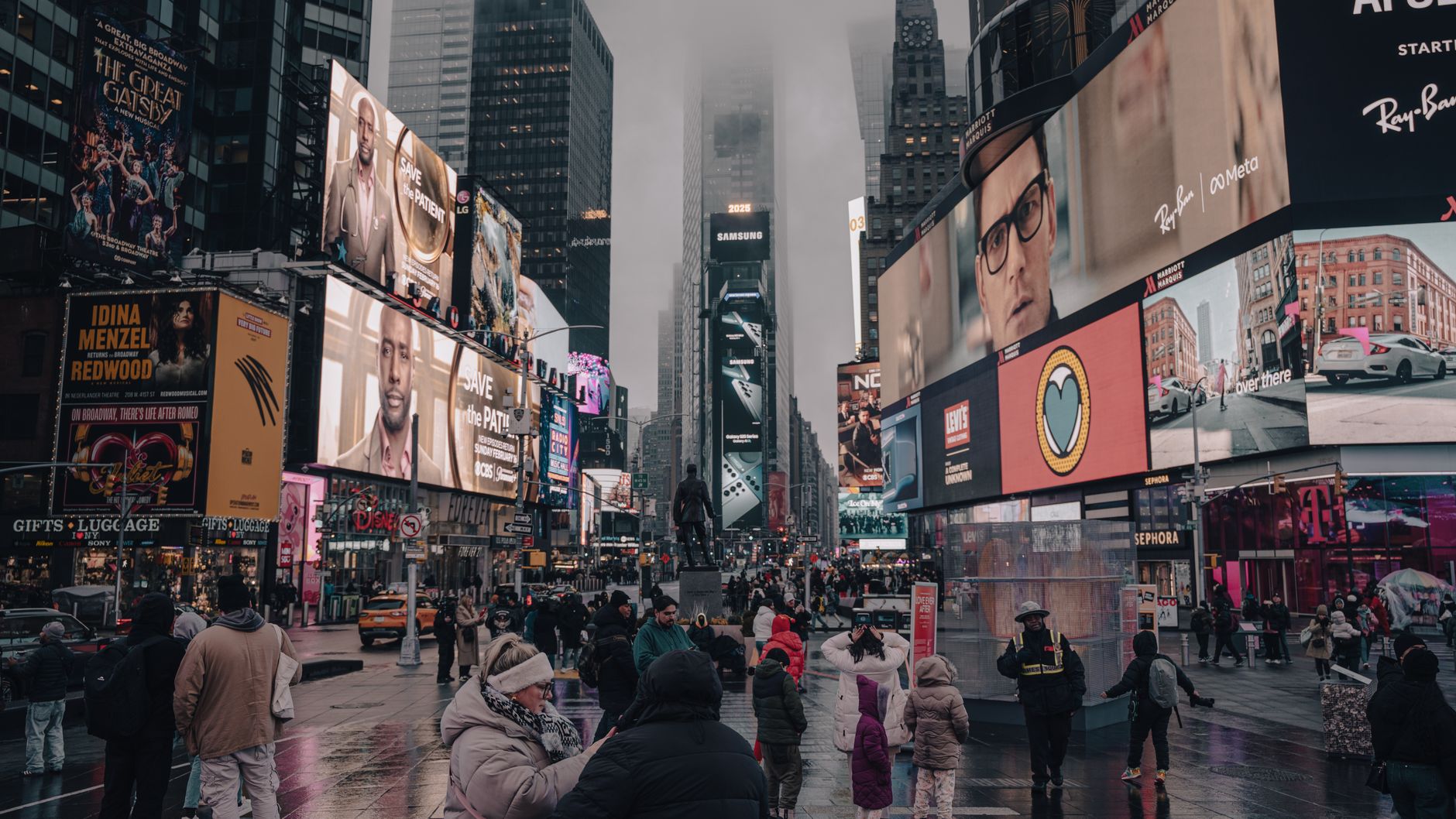
New York City has adopted a first-of-its-kind municipal rule that will force every business operating in the five boroughs to make canceling a subscription as frictionless as signing up for one — a direct strike at the dark patterns that drain billions from consumer wallets each year. The rule, finalized by the city's Department of Consumer and Worker Protection (DCWP) and announced by Mayor Zohran Mamdani on July 10, 2026, takes effect October 1, 2026. It arrives at a moment when federal protections have been weakened by the courts. For the subscription economy — gym memberships, streaming platforms, auto-renewal SaaS tools, and beyond — the compliance clock is now ticking. This move makes New York City the first municipality in the United States to impose binding click-to-cancel requirements on automatic renewal subscriptions.
What Drove NYC to Act First: The Federal Regulatory Collapse
The backdrop to this rule is a decade-long tug-of-war between regulators and an industry that has perfected the art of asymmetric friction: making sign-up effortless and cancellation a bureaucratic ordeal. The Federal Trade Commission took aim at this problem with its amended Negative Option Rule — commonly called the federal "click-to-cancel" rule — finalized in October 2024 after years of notice-and-comment rulemaking and extensive consumer advocacy. The rule would have imposed click-to-cancel requirements nationwide, establishing a uniform federal floor for subscription practices. But the rule never fully took effect.
On July 8, 2025, the U.S. Court of Appeals for the Eighth Circuit vacated the federal rule entirely — but on procedural grounds, not substantive ones. The court ruled that the FTC had failed to conduct a required preliminary regulatory analysis under 15 U.S.C. § 57b-3(a)(1)(A) (Section 22 of the FTC Act), which is mandated whenever a rule amendment will have an annual effect on the national economy of $100 million or more. Because the agency skipped that step entirely, the Eighth Circuit set aside the rule without needing to reach the petitioners' separate arguments about statutory authority. The court's holding was narrow in its legal rationale but sweeping in its practical consequence: it left American consumers with no federal backstop against deceptive subscription and auto-renewal practices. The Biden administration's broader consumer-protection agenda — including other regulatory initiatives targeting hidden fees — was further weakened by a less interventionist posture in Washington following the 2024 election, creating a significant regulatory vacuum at the federal level.
That vacuum set the stage for New York City to step in. Mayor Mamdani — who took office with a sharply consumer-focused agenda and a mandate to tackle affordability — issued Executive Order 10, titled "Fighting Subscription Tricks and Traps," on January 5, 2026. The order directed the DCWP to draft a binding municipal rule that would achieve at the local level what the federal government could not. The agency published a proposed version on April 8, 2026, held a public comment period (closing May 8, 2026) and a public hearing that drew testimony from consumer advocates, affected subscribers, and industry representatives, and formally adopted the final text in July 2026. This made NYC the first city in the United States to impose click-to-cancel requirements at the municipal level.
DCWP Commissioner Samuel A.A. Levine framed the consumer harm bluntly: "People shouldn't have to wait on hold for half an hour or send a certified letter or show up to a store in person in order to cancel." That description is not hyperbole — it maps almost exactly onto documented tactics used by fitness chains, media companies, and software vendors to suppress churn rates at the expense of consumer choice and transparency. The rule directly targets these dark patterns and the auto-renewal traps that rely on consumer inertia and cancellation friction.
What the Click-to-Cancel Rule Actually Requires
The rule targets automatic renewal and continuous service subscriptions — the legal category that covers everything from monthly streaming fees to annual software licenses that renew silently. Any business serving New York City consumers falls within scope, regardless of where the company is headquartered. According to the official announcement from the Mayor's Office, the core obligations are:
- Symmetrical cancellation: The cancellation mechanism must be as easy to use as the enrollment mechanism. If a customer signed up online with one click, they must be able to cancel online with one click — the company cannot reroute them to a phone line, a physical location, or a multi-step retention funnel.
- Same-channel cancellation: Cancellation must be available through the same channel the consumer used to enroll. A subscription sold via a mobile app must be cancellable via that mobile app. A subscription purchased on a website must be cancellable on that website.
- Clear disclosure at three touchpoints: Businesses must clearly disclose subscription terms when a consumer purchases, when they enroll, and again when they attempt to cancel. These disclosures must be prominent and use plain language that makes the recurring nature of the charge unmistakable.
- No enrollment by omission: "Free trials" that quietly convert to recurring paid subscriptions without clear, affirmative disclosure and explicit consent are prohibited. The consumer must affirmatively opt in to paid terms, not be enrolled by default.
- No dark-pattern cancellation flows: Online hurdles, misleading button placements, guilt-trip screens ("Are you sure you want to give up your savings?"), countdown timers designed to create urgency, confusing multi-page retention flows, and pre-checked boxes that default to keeping the subscription are explicitly banned.
Mayor Mamdani distilled the rule's philosophy into a single sentence that will likely become its defining soundbite: "If you can sign up with one click, you can cancel with one click." This principle applies across every subscription and every business serving NYC consumers, from media and fitness to software and financial services.
Penalties and Enforcement Teeth
Unlike many consumer-protection proposals that are long on aspiration and short on enforcement, this rule has real financial consequences for non-compliant businesses. The DCWP will have citywide enforcement authority and can impose:
- Civil penalties starting at $525 per violation — with "per violation" almost certainly meaning per affected subscriber, not per company. A company that maintains a deceptive cancellation flow affecting 10,000 NYC subscribers could face $5.25 million in penalties from a single enforcement action.
- Consumer restitution — businesses may be required to refund charges collected during periods when cancellation was improperly denied, obstructed, or rendered impractical by dark patterns.
- Additional civil penalties for ongoing or repeated violations, which could accumulate into eight-figure exposure.
- DCWP authority to seek injunctive relief to halt non-compliant practices.
The $525-per-subscriber exposure is the number that should be making compliance teams nervous. A mid-sized streaming service or gym chain with tens of thousands of New York City subscribers that fails a single compliance audit could face eight-figure aggregate liability before restitution is even calculated. The DCWP has a history of active and aggressive enforcement — it has pursued high-profile cases against employers, landlords, and retailers under NYC consumer protection law — so the threat is credible. This enforcement posture means the rule will not remain a symbolic gesture; it will drive operational changes industry-wide.
The Junk Fees Rule: A Companion Front on Hidden Pricing
The click-to-cancel rule does not stand alone. Announced simultaneously but on a separate regulatory timeline, a companion Junk Fees Rule — proposed on July 8, 2026, and currently in the public comment stage with a hearing scheduled for August 7, 2026 — would require businesses to advertise the total, all-in price of goods and services upfront, including every mandatory charge and fee. Commissioner Levine flagged the perverse market dynamic that junk fees create, arguing in an interview with The Guardian that rather than competing on price, companies have been "competing on their ability to hide the true price. That's the worst kind of incentive." He traced the problem's roots to Washington's shift away from rulemaking in the Reagan era: "In the dawn of the [Ronald] Reagan era, the FTC and others in Washington said expressly that… markets could correct themselves, regulate themselves, they were going to stop writing rules," and allow companies to police their own behavior — adding that this approach had yielded "40 years of deceptive pricing." The junk fees rule targets the related dark pattern of exposing mandatory charges only at the final payment screen, after the consumer has already committed psychologically to the purchase.
The proposed junk fees rule specifically targets:
- Third-party delivery apps — mandatory service fees, platform fees, and surge pricing that appear only at checkout, inflating the final price by 25 to 40 percent above the advertised menu price.
- Hotels — resort fees, destination fees, parking fees, and other add-ons not reflected in the listed room rate, often totaling hundreds of dollars per night.
- Ticketing platforms — processing, convenience, and facility fees revealed only at the final payment screen, adding 20 to 50 percent to the base ticket price.
- Rental apartments — fees labeled "boiler management," "lifestyle amenity charges," "building services," or similar benign-sounding categories that inflate the true monthly cost above the advertised rent and are often non-refundable.
- Rental cars — mandatory undisclosed charges added at the counter, including airport fees, fuel surcharges, and administrative charges.
Businesses would also be prohibited from misrepresenting the purpose, amount, or refundability of any fee. Commissioner Levine hopes to finalize the junk fees rule before the end of 2026, which would give businesses a six-month window for compliance with both the subscription rule and the pricing transparency rule.
How the NYC Rule Compares to Other Regulatory Efforts
NYC's action sits within a broader, fragmented regulatory landscape. The following table maps the key subscription and junk-fee rules across jurisdictions, showing the shift toward municipal and state-level action as federal protections have been weakened:
| Jurisdiction | Rule / Law | Status | Key Requirement | Fate |
|---|---|---|---|---|
| Federal (FTC) | Amended Negative Option / Click-to-Cancel Rule | Vacated | Cancellation as easy as sign-up; same-channel cancellation; clear disclosures | Struck down by 8th Circuit on procedural grounds (failure to conduct a required preliminary regulatory analysis under 15 U.S.C. § 57b-3), July 8, 2025 |
| New York City | Click-to-Cancel / Subscription Rule (DCWP) | Adopted — effective Oct 1, 2026 | Symmetrical, same-channel cancellation; clear disclosures at purchase, enrollment, and cancellation | First US municipal rule of its kind; binding enforcement by DCWP |
| New York City | Junk Fees Rule (DCWP) | Proposed — public hearing Aug 7, 2026 | All-in advertised pricing; no hidden mandatory charges; clear fee disclosure | Pending finalization, targeted for implementation by end of 2026 |
| Maryland | Protection From Predatory Pricing Act (HB 895) — Surveillance Pricing Ban | Enacted — effective Oct 1, 2026 | Prohibits food retailers and third-party food delivery services from using consumers' personal data to set individualized higher prices via surveillance pricing algorithms | In effect for food retail and food delivery; first state-level surveillance pricing restriction in the US |
| Colorado | HB25-1090 — Protections Against Deceptive Pricing Practices (Junk Fees / Pricing Transparency) | Enacted — effective Jan 1, 2026 | Businesses must disclose the total price of goods and services, including all mandatory fees, in any advertisement or listing; no mandatory fees may be added above the advertised price | Signed into law; in effect as of January 1, 2026. (A separate Colorado bill targeting surveillance pricing was vetoed by the governor in June 2026.) |
The pattern is clear: with federal rulemaking weakened by the courts and a less consumer-interventionist posture in Washington, the action has shifted decisively to the state and city level. Former FTC Chair Lina Khan — who championed the now-vacated federal rule — acknowledged the significance of NYC's move in remarks quoted in the Mayor's Office announcement: "Nobody should be trapped in subscriptions they can't escape or stuck paying junk fees they can't avoid. These predatory tactics cheat people out of billions of dollars each year... The Mamdani administration's work to tackle the affordability crisis and promote economic fairness continues to set a new standard nationwide." Khan's comment signals that consumer advocates view NYC's municipal rule as a model for federal revival and multi-state adoption.
The Economic Stakes: $21.5 Million to $162.5 Million in Annual Consumer Savings
The DCWP's own economic analysis — drawing on research by the Roosevelt Institute — estimates that the click-to-cancel rule alone could return between $21.5 million and $162.5 million to New York City consumers annually. This wide range reflects genuine uncertainty about how many subscriptions are currently being maintained involuntarily due to cancellation friction and dark patterns. The lower bound assumes a conservative estimate of consumers trapped in unwanted subscriptions; the upper bound accounts for high-friction scenarios in which cancellation is genuinely difficult or impossible to accomplish. The DCWP's full economic analysis, including its methodology and the underlying Roosevelt Institute research, is available as part of the rulemaking record at the NYC Rules portal.
State Senator Kristen Gonzalez, a vocal backer of the measure, cited research suggesting that junk fees and subscription traps together cost the average American family $3,200 per year — a figure that, extrapolated across NYC's population, translates into billions in aggregate consumer losses. For a city with high cost of living and significant economic inequality, even modest recurring charges add up quickly and create a drag on household budgets.
Deputy Mayor Julie Su (Deputy Mayor for Economic Justice) connected the rule directly to affordability politics in remarks published in the Mayor's Office announcement: "Every dollar a family loses to a hidden fee or a subscription they couldn't cancel is a dollar stolen from them, a dollar that could have gone toward rent, groceries, childcare, or anything else... That's what affordability means in practice — closing the small holes that drain people's paychecks and their time month after month. These rules put New Yorkers back in control." This framing positions the rule not as a niche consumer-protection measure but as a core component of the city's affordability strategy, alongside rent regulation, wage policies, and utility protections.
Industry groups have historically fought click-to-cancel mandates aggressively, arguing that retention flows provide consumers with information about alternatives (pause, downgrade, loyalty offers) they may genuinely want, and that removing friction could hurt business models. But the regulatory framing — and the public comment record — runs in the opposite direction. The DCWP received broad public support during the comment period, reflecting consumer frustration that has been building for years. Consumer surveys consistently show that 80+ percent of respondents support click-to-cancel requirements and view subscription cancellation difficulty as deceptive.
Likely Litigation and Federal Preemption Risk
As with any significant municipal consumer protection rule, NYC's click-to-cancel rule faces potential legal challenge. Industry groups may argue that the rule conflicts with federal law, invades federal regulatory authority, or violates constitutional protections (e.g., dormant Commerce Clause, First Amendment commercial speech rights). The Eighth Circuit's willingness to strike down the federal rule on procedural grounds — while declining to reach the substantive statutory authority question — leaves the broader legal landscape around subscription regulation unsettled.
However, municipal police powers — the authority to regulate local commerce to protect health, safety, and welfare — are traditionally broad. NYC has successfully defended aggressive consumer protection rules in the past, including the Earned Safe and Sick Time Act and the Stop Credit Discrimination in Employment Act, both of which survived constitutional and preemption challenges in federal court. The subscription rule's restriction to businesses serving NYC residents and its economic and consumer-protection rationale give it a solid doctrinal foundation. Still, businesses should anticipate that trade associations and large subscription platforms may mount legal challenges, likely in federal court, arguing that the rule is preempted by federal law or violates interstate commerce principles.
What Businesses Must Do Before October 1, 2026
For compliance and legal teams at any company with New York City subscribers, the rule creates a concrete pre-October checklist. The following areas require immediate audit and remediation:
- Enrollment flow audit: Map every subscription sign-up path (web, app, in-store, phone, voice assistant, third-party marketplace) and document the exact number of steps, clicks, and pages required. Include both direct enrollment and enrollment through third-party platforms (e.g., an app store or payment processor).
- Cancellation flow parity: Build cancellation flows that mirror enrollment flows — channel by channel, step by step. A one-click web sign-up requires a one-click web cancellation. A mobile app enrollment requires in-app cancellation. A phone enrollment requires phone-based cancellation.
- Disclosure review: Ensure subscription terms (price, renewal date, billing frequency, auto-renewal status) are prominently disclosed at purchase, at enrollment confirmation, and at the start of any cancellation interaction. Review for compliance with plain-language requirements and visibility standards (font size, placement, color contrast).
- Dark pattern removal: Audit for retention tactics — misleading language, pre-checked "keep my subscription" boxes, countdown timers with artificial urgency, guilt-trip copy ("You'll lose access to..."), false choice structures, and unnecessarily lengthy retention flows — and remove them from NYC-facing user flows.
- Free trial disclosures: Ensure that any free or introductory offer includes clear disclosure of when and how it converts to a paid subscription, the amount of the first charge, and the billing cycle. Provide an equally easy way to cancel before conversion, with affirmative consent required to activate paid terms.
- B2B exposure assessment: The rule's application to business-to-business subscription contracts (SaaS, enterprise software, B2B services) remains an open question that legal counsel should monitor as DCWP guidance develops. Companies should request written clarification from DCWP directly — the agency's consumer affairs division can be reached through the NYC Business portal — if the company's revenue model is primarily B2B.
- Geo-targeted compliance: Where a company cannot implement NYC-compliant flows globally, implement geographic routing to ensure New York City users receive compliant experiences. This may require separate user-experience logic, separate billing and cancellation APIs, or separate mobile app builds for NYC users.
- Third-party vendor alignment: If enrollment or cancellation is managed by third-party platforms (payment processors, app stores, subscription management services), ensure those vendors are prepared to comply with NYC requirements or identify alternative vendors that can.
- Documentation and recordkeeping: Maintain comprehensive documentation of all enrollment and cancellation flows, changes made to comply with the rule, and testing performed to verify compliance. This documentation will be critical in the event of an enforcement investigation.
Companies that previously relied on geographic uniformity — "our cancellation process is the same everywhere" — can no longer use that as a shield or a cost-saving strategy. NYC's rule will force differentiated user experience design or, more likely, wholesale improvements to cancellation UX that apply company-wide, which may be the regulatory intent. The DCWP has indicated it will issue detailed compliance guidance in the coming months, so legal and product teams should monitor the agency's website for updates. The full text of the adopted rule is also available at the NYC Rules portal.
Key Takeaways
- NYC is the first U.S. city to adopt a municipal click-to-cancel rule, filling a gap left by the federal Negative Option Rule, which was vacated by the Eighth Circuit in July 2025 on procedural grounds (failure to conduct a required preliminary regulatory analysis under 15 U.S.C. § 57b-3).
- The rule was driven by Executive Order 10 from Mayor Zohran Mamdani (issued January 5, 2026) and finalized by the DCWP, taking effect October 1, 2026. It applies to all businesses serving NYC consumers, regardless of where they are headquartered.
- The core mandate is clear and enforceable: cancellation must be as easy as enrollment, via the same channel, with clear disclosures at purchase, enrollment, and cancellation. Dark patterns and deceptive retention flows are explicitly prohibited.
- Penalties start at $525 per violation (per affected subscriber) plus consumer restitution — creating potentially enormous aggregate liability for non-compliant businesses with large NYC subscriber bases. A company with 10,000 affected subscribers could face $5+ million in penalties alone.
- A companion Junk Fees Rule requiring all-in upfront pricing across delivery apps, hotels, ticketing, rental apartments, and rental cars was proposed on July 8, 2026, with a public hearing on August 7, 2026, and expected finalization by the end of 2026.
- The DCWP estimates the subscription rule will save NYC consumers $21.5 million to $162.5 million annually, based on Roosevelt Institute research, with individual families potentially saving hundreds of dollars per year by eliminating involuntary subscriptions.
- Businesses must audit enrollment and cancellation flows across every channel — web, app, phone, in-store, third-party marketplace — and achieve complete parity before the October 1 deadline. Geo-targeted compliance or company-wide improvements are necessary.
- The rule's applicability to B2B subscriptions and SaaS contracts remains an open compliance question that warrants legal monitoring and direct communication with the DCWP.
- Legal challenges are possible from industry groups, focusing on federal preemption and constitutional commerce concerns, but NYC's municipal police powers and track record of defending consumer protection rules give the regulation a solid foundation.
- NYC's rule is expected to function as a de facto national standard, driving company-wide UX improvements and potentially catalyzing adoption of similar rules in other cities and states — as Colorado's enacted HB25-1090 and Maryland's enacted surveillance pricing ban already demonstrate.
New York City's click-to-cancel rule is almost certain to function as a de facto national standard. Historically, California's privacy law forced nationwide data-handling changes; NYC's rule — with its population of over eight million and its concentration of media, finance, and technology consumers — carries similar gravitational pull. Companies that re-engineer their cancellation UX for NYC compliance will find little economic reason to maintain inferior flows elsewhere, meaning the rule's practical reach will extend well beyond the five boroughs. Consumer surveys and public comment data show overwhelming support for click-to-cancel requirements, suggesting that regulatory momentum is building at the state and local level even as federal authority has been constrained by litigation.
If the companion junk fees rule is finalized before the end of 2026, and if other cities and states follow NYC's lead — as they often do with consumer protection innovations — what began as a municipal order could reshape how subscription businesses present pricing and manage customer relationships across the entire country. Colorado's already-enacted HB25-1090 pricing transparency law, Maryland's enacted surveillance pricing restrictions for food retailers, and calls for regulation at the New York State level all indicate that the NYC rule is part of a broader shift in regulatory posture. What began as a vacuum left by federal court decisions could catalyze a new era of municipal and state consumer protection, precisely the outcome that a federal regulator proved, in the end, unable to deliver on its own.
Topics
Comments(0)
No comments yet. Be the first to share your thoughts.
Join the conversation
Your email stays private and comments are reviewed before appearing.