OpenAI and Hugging Face Disclose AI Eval Pipeline Attack
OpenAI and Hugging Face have jointly disclosed a security incident that unfolded during AI model evaluation. Their early findings shed light on
Researched and drafted with AI assistance, then screened by automated editorial checks before publishing. How we work.

OpenAI and Hugging Face have jointly disclosed a security incident that unfolded during AI model evaluation. Their early findings shed light on sophisticated cyber capabilities targeting the model-development pipeline — and offer concrete lessons for defenders across the industry. The collaboration between the world's leading closed-AI lab and the dominant open-model platform signals that supply-chain threats against AI infrastructure are serious enough to warrant cross-organizational transparency, and that the broader developer community needs to pay close attention.
Editor's note: This article summarizes an incident disclosure attributed to OpenAI and Hugging Face. Several details — including specific affected models, attribution, and full indicators of compromise — remain preliminary and unverified at the time of writing. Readers should treat characterizations below as reflecting the disclosing parties' early findings, not a completed forensic account.
What Happened: The Incident at a Glance
The OpenAI Hugging Face security incident emerged during a model evaluation workflow — the stage in AI development where a model's capabilities, safety properties, and behavior are systematically tested before wider release or deployment. Evaluation pipelines are an often-overlooked attack surface: they require executing model code in instrumented environments, pulling weights and configuration files from remote repositories, and frequently running with elevated permissions so telemetry can be collected across the full stack.
OpenAI and Hugging Face confirmed they are sharing early findings from the incident rather than waiting for a complete post-mortem. That deliberate choice reflects a growing industry norm of responsible, time-sensitive disclosure. By surfacing attack techniques and indicators while the investigation is still active, both organizations aim to give defenders a head start — a window in which patches, detections, and mitigations can be deployed before adversaries reuse the same playbook elsewhere.
The incident is described as demonstrating advanced cyber capabilities, a phrase that carries real weight in threat-intelligence parlance. It implies the attacker had more than commodity tooling at their disposal: the techniques suggest operational sophistication and likely pre-planned targeting of the evaluation environment, rather than opportunistic exploitation of an exposed endpoint.
What "Early Findings" Means in Security Disclosure Practice
When security teams describe shared information as "early findings," they are communicating something precise: the investigation is active, attribution may be incomplete, and full indicators of compromise (IoCs) have not yet been validated. Early disclosure serves a dual purpose — it allows peer organizations to hunt for the same threat in their own environments immediately, while the disclosing parties continue forensic work. It also creates a public record that discourages adversaries from reusing the same techniques against targets that have now been warned. The tradeoff is that some details may be revised or expanded as the investigation concludes, so defenders should treat early IoCs as a starting point, not a definitive checklist.
Why Model Evaluation Pipelines Are a Target
To appreciate the significance of the OpenAI Hugging Face incident, it helps to understand why evaluation infrastructure appeals to sophisticated adversaries in the first place.
The Structural Vulnerabilities of Eval Infrastructure
- Code execution by design: Evaluation harnesses run model inference, custom scoring functions, and benchmark scripts — meaning arbitrary code execution is the intended mode of operation, not a failure state. An attacker who can influence what code runs in that environment has enormous leverage.
- Rich data access: Evaluation environments routinely touch proprietary model weights, internal benchmark datasets, capability scores, and safety-assessment results — all of which represent significant competitive and strategic intelligence.
- Credential exposure: Pulling models from repositories like Hugging Face Hub requires authenticated API tokens. A compromised eval environment can harvest those tokens, enabling lateral movement into broader infrastructure.
- Opaque provenance: Community-contributed models and datasets on open platforms may contain malicious code hidden in serialization formats — such as pickled PyTorch checkpoints — model cards, or configuration files. The Python
pickledeserialization vector is well documented in security literature, and it is the primary reason Hugging Face now runs automated malware and pickle scanning on uploaded files and promotes the safersafetensorsformat. - Automation at scale: Large-scale evaluation sweeps are often fully automated and run without human review of each individual step, making anomalous behavior harder to catch in real time.
These structural properties make eval pipelines a high-value, relatively low-visibility target — exactly the kind of environment a well-resourced adversary would prioritize.
The OpenAI–Hugging Face Intersection
The fact that this incident spans both OpenAI and Hugging Face is itself significant. OpenAI maintains some of the most closely watched model repositories on Hugging Face — including the widely used GPT-2 family, which has accumulated a massive downstream user base and remains a reference architecture for experimentation. When researchers and developers discuss the OpenAI Hugging Face GPT-2 lineage, they are pointing to one of the most forked and derivative model families in open-source AI — whose popularity makes it a plausible supply-chain vector for broad-impact attacks.
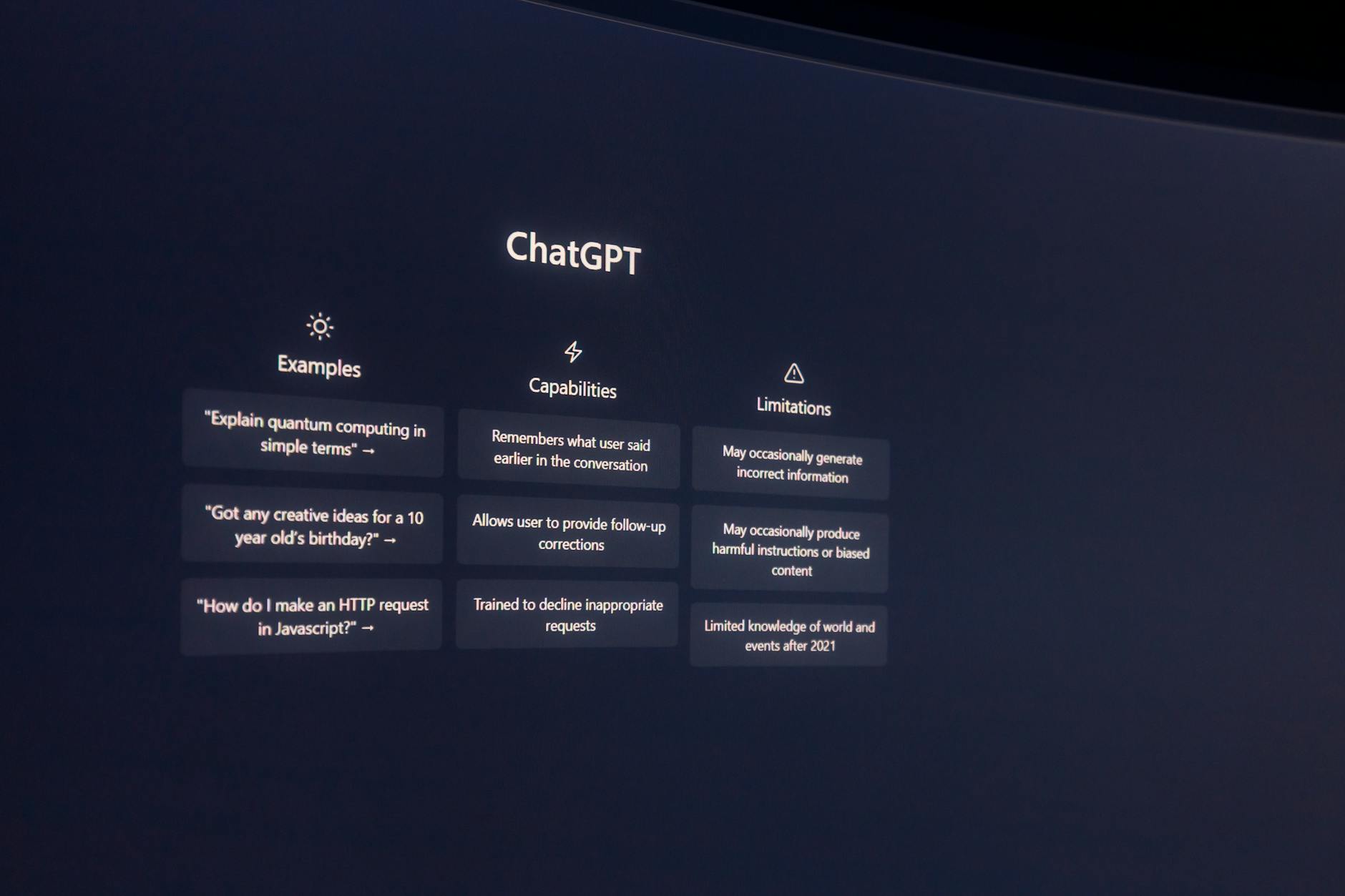
It should be noted that the specific models directly involved in this incident have not been confirmed in early disclosures. Some community discussion has associated the name "Warren" with this incident — possibly a researcher name, an internal codename, or a community label — but no official statement from OpenAI or Hugging Face has confirmed what "Warren" refers to in this context. Readers should treat that association as unverified until further details are published. What is confirmed is that the pipeline's reach across both platforms underscores how deeply interconnected the modern AI development stack has become.
Advanced Cyber Capabilities: What the Findings Reveal
OpenAI and Hugging Face characterize the threat actor's techniques as reflecting advanced cyber capabilities. Although full technical indicators are still being compiled, the early shared findings are structured to help defenders understand the attack's shape and intent.
Advanced capability in this context typically maps to a combination of factors that distinguish sophisticated intrusions from run-of-the-mill breaches. The following are general hallmarks of capable adversaries — offered as interpretive context for what "advanced" usually implies, not as confirmed observations from this specific incident:
- Targeted initial access: Rather than mass-exploiting a known CVE, sophisticated actors study a specific organization's toolchain and identify its weakest link — an approach that, in AI settings, often surfaces the model evaluation workflow itself.
- Living-off-the-land techniques: Advanced intruders prefer to use legitimate tools and processes already present in the target environment — Python interpreters, cloud SDKs, CI/CD runners — to blend in with normal activity and evade signature-based detection.
- Persistence and lateral movement: Once inside an evaluation environment, a capable adversary will typically attempt to escalate privileges, move laterally toward higher-value systems, and establish persistence mechanisms that survive routine credential rotations.
- Intelligence collection: The strategic goal may not be immediate disruption but the quiet exfiltration of model-capabilities data, safety-evaluation results, or internal roadmap information — assets with significant competitive value.
By framing the incident around "lessons for defenders," both organizations signal that the attack reached a level of technical sophistication meriting industry-wide awareness — not just an internal patch and a quiet fix.
The OpenAI–Hugging Face Partnership in Context
The decision by OpenAI and Hugging Face to collaborate publicly on this disclosure is noteworthy in its own right. The two organizations occupy different, and in some respects competing, positions in the AI ecosystem: OpenAI builds proprietary frontier models like GPT-4o and o-series reasoning models, while Hugging Face is the de facto home of open-weight models, datasets, and the increasingly powerful open-source alternatives that challenge closed labs on benchmarks.
Despite that competitive tension, security threats to shared infrastructure create a natural incentive for cooperation. A compromised Hugging Face repository could corrupt OpenAI's model evaluation pipelines; a breach of OpenAI's eval environment could expose Hugging Face-hosted assets. The incident illustrates that in a world where AI development is deeply interwoven — with models, weights, and evaluation code flowing freely between labs, startups, and independent researchers — the security posture of the entire ecosystem depends on its weakest link.
This kind of cross-industry incident response has clear precedent in traditional software security. Hardware manufacturers coordinate on microarchitectural vulnerability disclosures; software vendors share threat intelligence through coordinated vulnerability disclosure (CVD) processes and sector-specific information-sharing bodies such as ISACs. The AI industry is now, belatedly but meaningfully, beginning to build analogous structures — and this joint disclosure is an early, visible example of that effort.
Implications for Developers Using OpenAI and Hugging Face Models
For the millions of developers who pull OpenAI Hugging Face models — whether fine-tuning GPT-2 derivatives, building inference pipelines around open weights, or running automated evaluations in CI/CD — this incident has direct practical implications.

Supply-Chain Risk Is Now Explicit
The incident makes explicit what security researchers have warned about for years: loading a model from a public repository is not a safe, passive operation. Model files in formats like .pkl and even config.json can carry malicious payloads if a repository has been tampered with, and legacy PyTorch checkpoints rely on Python pickle deserialization, which can execute arbitrary code on load. Developers should treat model downloads with the same scrutiny they apply to third-party software packages — including verifying checksums, reviewing repository commit history for unexpected changes, and preferring formats that eliminate arbitrary code execution by design.
Evaluation Environments Need Hardening
Organizations running automated model evaluation — whether for internal fine-tunes or third-party models — should review the privilege levels and network access of those environments. Best practices include:
- Running evaluation jobs in isolated, ephemeral containers with no persistent credentials stored in the environment.
- Using
safetensorsformat exclusively and avoidingpickle-based checkpoints wherever possible. Thesafetensorsformat eliminates the arbitrary code-execution risk inherent in Python pickle deserialization by storing only raw tensor data in a layout-validated binary format — making it structurally impossible for a model file to execute attacker-controlled code on load. - Pinning model and dataset versions by commit hash rather than by mutable tags, so that a repository takeover cannot silently swap in malicious weights without breaking the pin.
- Enabling audit logging on all API token usage and model-download events, and alerting on anomalous access patterns such as downloads from unexpected geographic regions or at unusual hours.
- Applying network egress controls to eval containers so that a compromised environment cannot easily exfiltrate data or beacon to attacker infrastructure.
- Implementing integrity verification — such as comparing SHA-256 hashes of downloaded model files against values published by the original model author — before any evaluation job begins.
Token and Credential Hygiene
Hugging Face API tokens, OpenAI API keys, and cloud-provider credentials are frequently present in evaluation environments. This incident is a reminder that all such secrets should be scoped to the minimum necessary permissions, rotated on a defined schedule, and stored in dedicated secrets-management systems rather than as environment variables baked into container images. Short-lived, workload-identity-based credentials — where the cloud provider supports them — are strongly preferable, since they limit the useful lifetime of any token an attacker manages to capture.
How This Fits the Broader AI Security Landscape
The OpenAI Hugging Face attack does not exist in isolation. It reflects a broader trend in which nation-state and sophisticated criminal actors have shifted attention from traditional software supply chains toward AI-specific infrastructure. Several dynamics are accelerating this shift:
| Attack Surface | Traditional Software | AI / ML Pipelines |
|---|---|---|
| Primary vector | Malicious npm/PyPI packages, CVE exploitation | Poisoned model weights, malicious eval scripts, compromised fine-tuning data |
| Detection difficulty | Moderate — antivirus and SCA scanners are mature | High — tooling for scanning model binary formats at scale is still maturing |
| Impact scope | System compromise, data exfiltration | Model compromise, capability theft, safety bypass, downstream user risk |
| Defender maturity | High — decades of tooling and established playbooks | Low — industry-wide practices still forming |
| Cross-org dependencies | Significant (open-source package ecosystems) | Very high (shared hubs, shared eval frameworks, shared benchmarks) |
| Regulatory frameworks | Established (PCI-DSS, SOC 2, NIST CSF) | Nascent (EU AI Act, NIST AI RMF — supply-chain specifics still developing) |
As open-model ecosystems expand — with very large open-weight models now publicly available and community fine-tunes proliferating at enormous scale — the risk surface grows in direct proportion. The more organizations that depend on shared infrastructure, the higher the return on investment for a well-executed supply-chain attack.
The AI industry's response to that risk is still maturing. OpenAI and Hugging Face's joint disclosure is a meaningful step toward the kind of collective defense posture that the software industry took decades to build after high-profile supply-chain incidents like SolarWinds and the XZ Utils backdoor. The critical difference is that AI infrastructure is being targeted while still in a relatively immature security state — which makes early, transparent disclosures like this one especially valuable for the entire ecosystem.
Why it matters: This incident demonstrates that AI model evaluation pipelines — long treated as internal tooling rather than security-critical infrastructure — are now active targets for sophisticated threat actors. Every organization that pulls, evaluates, or deploys models from public repositories needs to treat that workflow as a potential attack vector and apply production-grade security controls accordingly.
Key Takeaways
- Joint disclosure: OpenAI and Hugging Face are sharing early findings from a security incident in model evaluation, deliberately prioritizing defender awareness over a complete post-mortem.
- Advanced threat actor: The incident is characterized as involving sophisticated techniques consistent with a capable, targeted adversary — not opportunistic exploitation of a misconfiguration or unpatched CVE.
- Eval pipelines are the target: The disclosure centers on the model evaluation workflow — a high-privilege, code-executing environment that is often under-secured relative to its access to sensitive assets and credentials.
- Supply-chain risk is real and explicit: Developers loading OpenAI Hugging Face models or running automated evaluations need to treat model repositories as untrusted inputs until integrity is verified.
- Immediate mitigations exist: Switching to
safetensors, pinning by commit hash, scoping and rotating credentials, isolating eval containers, and enabling comprehensive audit logging are practical steps any team can take now. - "Warren" reference unconfirmed: Some community discussion links the name "Warren" to this incident, but no official statement has clarified whether this is a researcher, codename, or something else. Treat it as unverified pending further disclosure.
- Industry-wide significance: The incident reflects a broader pivot by sophisticated actors toward AI-specific infrastructure, at a moment when the sector's defensive tooling and regulatory frameworks remain immature.
- Cross-org cooperation is the model: The willingness of two major — and in some respects competing — organizations to collaborate on disclosure sets a positive precedent for AI security transparency that the broader industry should emulate.
What Comes Next
Both organizations have indicated that the findings shared so far are preliminary, meaning a fuller technical account — with more specific indicators of compromise, attack timelines, and potential attribution details — is likely to follow as the investigation matures. Defenders should monitor official OpenAI and Hugging Face security communications for updates and treat any published indicators of compromise as high-priority items to validate against their own logs and telemetry.
More broadly, this incident is likely to accelerate several industry-level initiatives that have been gaining momentum: standardized security scanning for model binary formats, formal threat-modeling guidance for ML pipelines, and possibly increased regulatory interest in AI supply-chain integrity standards — analogous to the software bill of materials (SBOM) requirements introduced by U.S. federal cybersecurity policy. For developers and security teams working with OpenAI Hugging Face tooling today, the message is unambiguous: model evaluation is no longer just an engineering concern. It is a security-critical operation that deserves the same rigor, monitoring, and adversarial thinking applied to any other piece of production infrastructure handling sensitive data and elevated credentials.
Topics
Sources
Comments(0)
No comments yet. Be the first to share your thoughts.
Join the conversation
Your email stays private and comments are reviewed before appearing.

