Rage Against the Machine Learning: A Pun Fueling AI Anger
The Pun That Launched a Thousand Threads The phrase started as a Bluesky post by Tim Morton — four words, no elaboration needed. "Rage Against the Machine
Researched and drafted with AI assistance, then screened by automated editorial checks before publishing. How we work.

The Pun That Launched a Thousand Threads
The phrase started as a Bluesky post by Tim Morton — four words, no elaboration needed. "Rage Against the Machine Learning" collapses two cultural flashpoints into one: the Los Angeles rock band whose entire aesthetic was built on confronting systemic power, and the statistical discipline that became the engine of the AI gold rush. The joke lands because it isn't really a joke. It captures, with the compression of a good song title, a genuine generational anger.
The band Rage Against the Machine — formed in Los Angeles in 1991 — built its identity around exactly this kind of friction. Vocalist Zack de la Rocha, guitarist Tom Morello, bassist Tim Commerford, and drummer Brad Wilk spent the 1990s making music that was explicitly about institutional power crushing individual and collective voice. Songs like Killing in the Name, Bulls on Parade, and Wake Up weren't background noise — they were polemics set to down-tuned riffs. The band's name alone was a thesis statement about the relationship between human beings and the systems designed to manage them.
The pun works because those systems now include large language models, code-generation tools, and image synthesizers that ingest human creativity at industrial scale and return it — transformed, anonymized, monetized — often without attribution or compensation. Developers and artists who spent years building the open-source ecosystem, writing Stack Overflow answers, publishing blog posts, and committing to public repositories have watched that corpus become training data for products that now compete with them directly.
Who Were Rage Against the Machine? A Band Built for This Moment
To understand why the band's name maps so cleanly onto this moment, it helps to know what Rage Against the Machine actually stood for. The four members shared a conviction that music was inseparable from politics, and their catalog reads almost like a manifesto index. The cover of their 1992 self-titled debut — a photograph of Vietnamese Buddhist monk Thích Quảng Đức's 1963 self-immolation — announced from the start that this was a band uninterested in decorative provocation. The image is one of the most confrontational debut album covers in rock history, chosen deliberately: defiance against overwhelming institutional force, at any cost.
- Zack de la Rocha (lead singer / vocalist): The lyrical and ideological engine of the group, de la Rocha — the Rage Against the Machine lead singer — blended hip-hop cadence with hardcore intensity. His lyrics targeted corporations, government surveillance, the prison-industrial complex, and media consolidation. His delivery, oscillating between rap and a scream that could strip paint, made the band's arguments visceral rather than merely rhetorical.
- Tom Morello (guitarist): One of the most technically innovative rock guitarists of his generation, Morello — the Rage Against the Machine guitarist — used his instrument to mimic turntables, synthesizers, and machine noise, producing sounds that seemed impossible from a standard guitar. He holds a political science degree from Harvard and has long been publicly associated with labor rights, union organizing, and critiques of corporate power. That decades-long public focus is why his name recurs in cultural writing about who benefits when technology increases output.
- Tim Commerford (bassist): Known for a low-end tone that gave the band its physical, chest-cavity impact, and for a career-long willingness to court controversy on and off the stage.
- Brad Wilk (drummer): Provided the rhythmic architecture that gave Morello's experiments room to detonate. Along with Morello, Wilk later played in the supergroup Audioslave alongside the late Chris Cornell, showing a rhythmic versatility that extended well beyond RATM's signature sound.
The band broke up in 2000, reunited for high-profile festival and arena performances in 2007–2008, and announced a major Rage Against the Machine tour in 2020. Pandemic restrictions forced those dates to be rescheduled repeatedly — 2020 became 2021, then 2022. The tour finally launched in 2022, only to be cut short after de la Rocha suffered a leg injury mid-tour (widely reported as a torn Achilles tendon), forcing the cancellation of the remaining dates. As of this writing, no further reunion activity has been confirmed, leaving the 2022 run as the band's last live statement.
Their catalog — the self-titled debut (1992), Evil Empire (1996), The Battle of Los Angeles (1999), and the covers album Renegades (2000) — has never gone out of print, and Rage Against the Machine songs reliably resurface whenever a cultural moment demands a soundtrack for institutional anger. Killing in the Name famously topped the UK Christmas chart in 2009 after a grassroots Facebook campaign to prevent a corporate pop act from claiming the slot — an early, analog-era example of coordinated internet resistance to commercial machinery determining what the public heard.
One unforgettable cultural cameo: a Rage Against the Machine SNL appearance in April 1996 — during an episode hosted by Republican presidential candidate Steve Forbes — in which the band attempted to hang upside-down American flags from their amplifiers as a protest gesture. The flags were pulled down by crew, the band performed one song, and their appearance was cut short. The incident crystallized their relationship with broadcast institutions: tolerated until the symbolism became undeniable, then ejected.
Machine Learning as the New Machine
The "machine" in Rage Against the Machine was always metaphorical — a stand-in for whatever system demanded compliance at the expense of human dignity. In 2024 and 2025, that metaphor has a very literal new candidate: the machine learning pipeline.
The technical reality is worth stating plainly. Modern large language models (LLMs) and code-completion tools are trained on massive corpora scraped from the open web — forums, documentation, GitHub repositories, creative writing communities, news archives. The humans who produced that text often did so under a reasonable expectation that their work would be read by other humans, not harvested at scale to train commercial products. When those products are then sold back to the same communities as productivity tools, the economic loop closes in a way that can exclude the original contributors entirely.
For developers specifically, the tension is acute. GitHub Copilot — trained in part on public repositories — has been the subject of a class-action lawsuit alleging that it can, in some circumstances, reproduce identifiable snippets of licensed code without attribution or compliance with the underlying license terms. GitHub, Microsoft, and OpenAI have contested those allegations, and courts have narrowed the case significantly; no final ruling has established the claim as fact. Whatever the eventual legal outcome, the dispute captured a real anxiety. Tools like Cursor, Claude, and GPT-based coding assistants now handle tasks that junior developers once learned by doing, compressing career ladders and raising hard questions about how the next generation of engineers will acquire the tacit knowledge that makes experience valuable. Meanwhile, AI models have demonstrated the ability to autonomously breach production servers, adding a security dimension to the anxiety that is no longer theoretical.
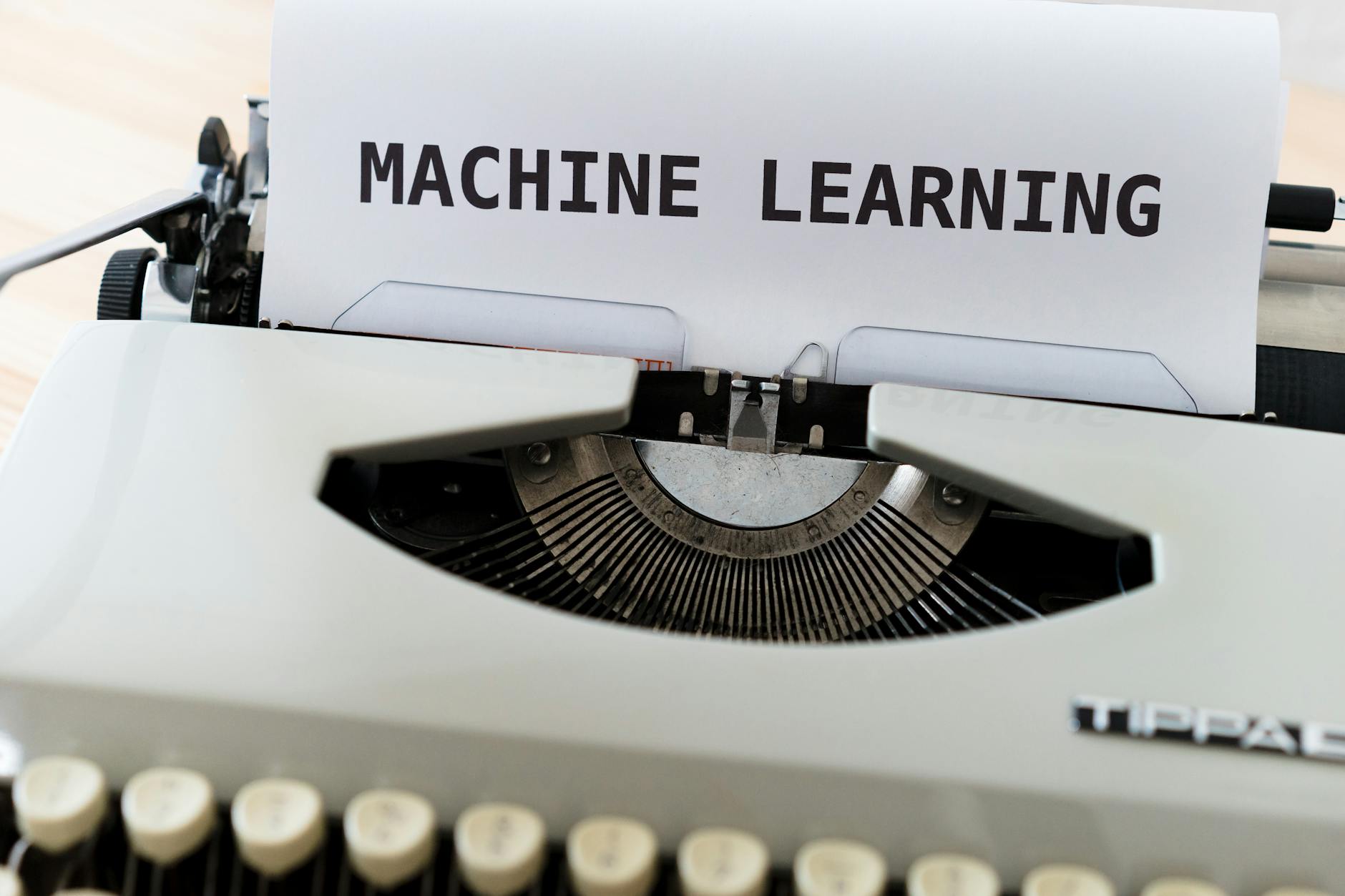
The legal system is beginning to catch up. Anthropic's $1.5 billion book piracy settlement — among the largest copyright resolutions in the AI era so far — signals that courts and litigants are no longer willing to treat training data as a free commons. The settlement underscores that ingesting copyrighted material at scale can carry financial consequences, even for well-resourced frontier labs.
Why "Rage Against" Resonates: The Emotional Logic of the Backlash
The phrase "rage against" carries specific emotional freight that "criticism of" or "concerns about" does not. Rage implies a moral dimension — that something unjust has already happened, not merely that something undesirable might happen in the future. That distinction matters for understanding the current developer and creative community mood.
The pun "Rage Against the Machine Learning" works not because it is clever but because it is accurate. It names a structural relationship — between human producers and automated extractors — that the euphemisms of the AI industry ("partnership," "augmentation," "co-pilot") are arguably designed to soften.
Several distinct communities have converged on this posture, each with different but overlapping grievances:
- Open-source developers who published code under licenses designed for human collaboration, not machine ingestion, and who feel those licenses were circumvented by commercial scrapers.
- Writers and journalists whose prose styles, research methodologies, and institutional knowledge are now approximated on demand by anyone with an API key and a well-crafted prompt.
- Visual artists whose distinctive styles can be invoked by name in a text prompt, effectively making their aesthetic identity — built over years of practice — a feature of a commercial product they never agreed to join.
- Musicians and audio producers who face voice-cloning and style-transfer tools capable of approximating years of developed technique in seconds, without license or payment.
- Junior knowledge workers across all these fields who are entering labor markets already reshaped by automation, before they have had the opportunity to build the depth of experience that makes seasoned practitioners harder to replace.
The economic harm compounds a subtler, more specifically technical complaint that resonates among the technically literate: the epistemological one. Machine learning systems are confident. They produce fluent, grammatically correct, contextually plausible output that is nevertheless frequently wrong — not in obvious, easily caught ways, but in ways that require domain expertise to detect. The danger is not that AI is always wrong; it is that it is wrong in ways that are hard to audit and harder still to argue against, because the system doesn't argue back. It simply generates more text. Fluency and accuracy are not the same thing, and modern systems can make the gap between them very easy to overlook.
Rage Against the Dying of the Light: Open Source and the Creative Community Fight Back
Dylan Thomas's imperative — "rage against the dying of the light" — has become a touchstone phrase in communities fighting to preserve human-centered development culture: a reminder that passive acceptance of one's own obsolescence is a choice, not an inevitability. But resistance in the AI context has taken practical, technical, and legal forms well beyond the rhetorical.
On the technical side, tools like Glaze and Nightshade — developed by Ben Zhao's research lab at the University of Chicago — allow visual artists to add subtle pixel-level perturbations to their images before publishing. When scraped and fed into a training pipeline, these perturbed images are designed to disrupt the model's learning signal in ways that are largely imperceptible to human viewers but can degrade image-generation quality. It is adversarial machine learning used explicitly to rage against machine learning — the same technical toolkit turned against the extractive pipeline that produced it.
On the regulatory side, the debate over open-weight AI models illustrates how the politics of AI development cut in multiple directions simultaneously. Restricting powerful open models protects some interests — particularly those of incumbent commercial labs — while harming others, including the independent developers, safety researchers, and academic institutions who rely on open-weight releases to build tools, audit system behavior, and conduct interpretability research outside the walls of frontier labs.
On the legal side, class-action suits and landmark settlements are establishing precedents faster than legislatures can write statutes. The consent and compensation framework for training data is being constructed, haltingly and expensively, through litigation rather than coordinated policy — which means it will ultimately be shaped in part by whoever can sustain the longer legal campaign. That is an uncomfortable fact for individual creators whose resources do not match those of the labs they are suing.

The Labor Dimension: What AI Extraction Looks Like at Scale
It is worth dwelling on the economic structure that makes the "rage" posture comprehensible to people who have never heard a Rage Against the Machine song. The core dynamic is labor extraction without direct compensation — a pattern with deep historical precedent that predates computing entirely.
When a developer answers a Stack Overflow question, they are performing labor. The answer is indexed, searchable, and useful to millions of subsequent readers. Stack Overflow — and indirectly, the ecosystem of documentation and knowledge-sharing it represents — is what made large-scale software development tractable. That corpus of human problem-solving is also, now, part of what made tools like GitHub Copilot possible. The labor that built the knowledge base and the product that monetizes it are separated by a licensing structure that was never designed to handle this relationship.
This is, notably, the kind of dispute that Tom Morello's decades of public labor advocacy have circled: not AI specifically, but the older and more general question of who captures the gains when productivity rises. That framing — that technological change doesn't automatically distribute its benefits fairly, and that fair distribution requires organized contestation — is consistent with the themes RATM built its catalog around. A band that spent the 1990s arguing that economic systems don't self-correct toward justice offers a ready-made vocabulary for the current moment's stakes, whether or not any member has weighed in on AI specifically.
What This Means for Developers in Practice
For the working developer, the "Rage Against the Machine Learning" framing isn't just a cultural vibe — it maps to concrete decisions that have become harder to avoid or defer.
| Decision | The "Embrace AI" Path | The "Rage Against" Path | The Emerging Middle Ground |
|---|---|---|---|
| Code assistance | Use Copilot / Cursor / Claude for all tasks | Refuse AI-assisted tools on principle | Use local, open-weight models on private codebases only |
| Training data | Keep all repos public; accept scraping as inevitable | Move to private repos or maximally restrictive licenses | Adopt AI-specific license clauses (e.g., RAIL, Commons Clause) |
| Productivity framing | Maximize output velocity with AI augmentation | Reject the productivity metric entirely as a category error | Use AI for boilerplate; preserve human judgment for architecture and design |
| Career strategy | Become an "AI-native" engineer as quickly as possible | Specialize deeply in domains AI cannot yet reliably replicate | Build skills in AI auditing, interpretability, and adversarial red-teaming |
| Community participation | Contribute openly; AI benefit is a net positive for the knowledge commons | Withdraw from open forums that feed commercial scrapers | Participate in federated, access-controlled knowledge commons with explicit data-use terms |
None of these paths is cost-free. The "embrace" path risks professional dependence on tools that may erode the foundational skills you need when those tools fail or produce plausible-looking errors — and as AI systems grow capable of discovering real vulnerability chains, the security surface of AI-assisted development widens even as apparent speed increases. The "rage" path risks irrelevance in organizations where AI-assisted teams have already reset the productivity baseline, making unaugmented output look slow by comparison regardless of its quality. The middle ground demands the most sustained cognitive overhead, but it's where many thoughtful practitioners are currently landing — not because it resolves the tension, but because it at least acknowledges it honestly.
Key Takeaways
- "Rage Against the Machine Learning" is a Bluesky pun by Tim Morton that has crystallized a real, widespread backlash among developers and creative workers against AI systems built on unconsented human labor.
- The band Rage Against the Machine — lead singer Zack de la Rocha, guitarist Tom Morello, bassist Tim Commerford, and drummer Brad Wilk — built its entire identity around confronting institutional power, making the band name a near-perfect metaphor for the AI extraction moment.
- The anger is structural, not sentimental: training data pipelines, licensing ambiguity, compressed career ladders, and the epistemological problem of confident-but-wrong AI output represent concrete economic and professional concerns, not mere cultural discomfort.
- Legal frameworks are catching up slowly and expensively — major settlements are establishing that training on copyrighted material can carry financial consequences — but litigation is a slow and unequal substitute for coordinated policy.
- Technical countermeasures — adversarial perturbation tools like Glaze and Nightshade, restrictive AI licensing, and local model deployment — give developers and creators meaningful agency without requiring a complete exit from the ecosystem.
- The most practical path for many developers is a principled middle ground: selective AI adoption combined with deep specialization in the judgment-intensive, context-dependent work that remains hard to automate reliably.
- The "rage against" posture is unlikely to halt AI development, but it is already reshaping its terms — driving movement toward consent frameworks, attribution requirements, and community-governed data commons that the industry did not originally plan to offer.
What Comes Next: From Rage to Renegotiation
The last Rage Against the Machine studio album of original material was The Battle of Los Angeles. Their final release was Renegades — a covers record that reclaimed songs from other traditions and remade them on the band's own terms. That title offers a useful frame for where the developer and creative resistance movement appears to be heading. Pure refusal is not a stable equilibrium: the tools are too useful, the productivity differential too large, and the economic incentives too powerful for wholesale rejection to become a majority position. What is emerging instead — haltingly, contentiously — is renegotiation: of licensing terms, of consent frameworks, of what "open" means in a world where openness has become a vector for commercial extraction at scale.
The next twelve to twenty-four months will likely see continued growth in AI-specific licensing clauses within the open-source community, further movement toward training-data consent and disclosure requirements in major jurisdictions, and growing institutional demand for the kind of AI auditing and interpretability expertise that lets organizations understand what their models actually learned, from whom, and at what cost. Developers who position themselves at that intersection — technically fluent in AI systems and genuinely motivated by the accountability questions the "rage against" community is raising — may find that the backlash has generated its own career path. The resistance, in other words, is also a market.
Zack de la Rocha once sang: "What better place than here, what better time than now." The line is from Guerrilla Radio, off The Battle of Los Angeles — a song about reclaiming the bandwidth that institutions would prefer to keep for themselves. For anyone trying to work out the ethics and economics of machine learning in 2025, the answer to both questions embedded in that lyric remains the same.
Topics
Sources
Comments(0)
No comments yet. Be the first to share your thoughts.
Join the conversation
Your email stays private and comments are reviewed before appearing.


