Samsung will delete your health data if you don't let them use it to train AI
Reports circulating about Samsung Health suggest the app may present some users with a stark choice: consent to having personal health data used to help
Researched and drafted with AI assistance, then screened by automated editorial checks before publishing. How we work.

Reports circulating about Samsung Health suggest the app may present some users with a stark choice: consent to having personal health data used to help develop or improve AI models, or lose the ability to keep that data stored with Samsung. Important caveat up front: at the time of writing, AIBites has not been able to independently verify the exact wording, scope, or existence of such a policy against Samsung's official published terms. Treat everything that follows as an analysis of what would be at stake if such a policy were introduced as described — not as confirmation that Samsung has issued this ultimatum. That distinction matters, and we flag it throughout.
For the millions of Galaxy device owners who rely on Samsung Health to track sleep, heart rate, exercise, and other metrics, a policy of this kind would not be an abstract privacy debate — it would be a concrete trade-off backed by a deletion mechanism. Understanding what it could mean requires pulling apart what Samsung collects, why it might want it for AI, and what a user's real options are. Where we describe the policy, we do so conditionally and label it as unverified.
What Samsung Is Reportedly Said to Be Asking — and What Refusal Might Mean
The reported claim centres on a consent prompt inside Samsung Health asking users to agree to their data being used for AI model development and improvement. We have not seen Samsung's official terms confirming a deletion-on-refusal mechanism, so the specifics below are illustrative of the category of data involved rather than a confirmed account of Samsung's policy.
Samsung Health is, by design, one of the more data-rich applications on a Galaxy device. Depending on the user's hardware and settings, it can ingest heart-rate readings from Galaxy Watch sensors, GPS tracks from outdoor workouts, sleep data derived from motion and heart-rate sensors, blood-oxygen measurements on supported watches, stress estimates derived from heart-rate variability, and manually logged nutrition and medication information. Exactly which of these a given user has stored depends on their device and permissions.
If the reported terms are accurate, the policy would frame this as an opt-in. Critics quoted in circulating reports characterise it instead as a coercive opt-in: users who decline — or who simply do not actively agree — would face the prospect of Samsung deleting accumulated health records rather than merely losing new features. We want to be explicit that this characterisation is contested and unverified; if Samsung's actual policy differs, this framing does not apply.
Assuming the reports are accurate, this would be meaningfully different from the standard "we may use your data to improve our services" boilerplate that most apps bury in a privacy policy, because it would make the stakes of refusal explicit and immediate. Whether that would be praiseworthy transparency or an alarming ultimatum would depend on how much notice users receive and how any export window is structured — details that remain unconfirmed and are essential for any fair assessment.
Key concern (our analysis): If a company ties continued access to your own historical data to your consent for commercial AI development, "consent" arguably stops being meaningful. Genuine consent requires a viable alternative — and deleting irreplaceable health history is not one. This is our editorial view of the principle at stake, not a finding of fact about Samsung's current terms.
Why a Company Like Samsung Would Want Health Data for AI
Samsung's interest in health AI is neither new nor surprising. The company markets its Galaxy AI platform — the umbrella brand for on-device and cloud-based AI features across Galaxy phones, tablets, and wearables — as a competitive differentiator against Apple's health ecosystem and Google's Fitbit-derived data assets. Training proprietary health models generally requires large quantities of labelled, real-world physiological data, and Samsung's installed base of Galaxy Watch and Galaxy phone users represents one of the larger continuously monitored populations of consumer health data.
High-quality health AI models benefit from data reflecting genuine human diversity: different ages, body types, activity levels, geographic populations, and health conditions. Anonymised or synthetic data can supplement real-world recordings but is widely regarded as an imperfect substitute when training models that must generalise across a heterogeneous global user base. From a manufacturer's perspective, its own customers can represent a difficult-to-replicate training corpus — one that a third-party data broker may not assemble with the same fidelity, continuity, or clear legal chain of custody.
This dynamic isn't unique to Samsung. The broader AI industry is widely reported to be contending with data scarcity as the most accessible public text and image datasets are increasingly exhausted. Health data is often described as one of the last frontiers of high-signal, longitudinal, real-world human data not yet swept into foundation models at scale. Companies that control proprietary health data pipelines could hold a structural advantage in personalised AI health features — a plausible reason a company might want explicit training consent from its user base.
The privacy stakes are especially high because this concerns health information specifically. As we've discussed in other contexts, the question of who controls sensitive data — and what happens when that control shifts — can have consequences beyond what users initially anticipate.
How Health-Data Consent Is Generally Handled Across Big Tech
To put the reported Samsung approach in context, it helps to look at how major platforms broadly describe their handling of health data. The table below reflects our general, non-exhaustive reading of publicly stated positions and industry reporting; it is not a verbatim quotation of any company's current terms, policies change frequently, and readers should consult each platform's official documentation for authoritative details. Cells marked "not clearly stated / unverified" indicate we could not confirm a specific published position.

| Platform | Health data used for AI training? (per public positioning) | Consent model (general) | Stated consequence of declining |
|---|---|---|---|
| Samsung Health | Reportedly yes (unverified) | Reported as opt-in (characterised by critics as coercive; unverified) | Data deletion reportedly threatened (unverified) |
| Apple Health | Apple emphasises on-device processing and does not market Health data as training material | Research participation (e.g. Apple Heart Study) is separately and explicitly consented | Not clearly stated / unverified |
| Google Fit / Fitbit | Google's policies describe using data to provide and improve services; specifics vary | Consult current Google/Fitbit terms; not verified here | Not clearly stated / unverified |
| Garmin Connect | Garmin has publicly described aggregated/analytics uses; specifics vary | Consult current Garmin terms; not verified here | Not clearly stated / unverified |
| Whoop | Whoop describes platform-improvement uses; specifics vary | Consult current Whoop terms; not verified here | Not clearly stated / unverified |
Apple has built considerable brand equity around the principle that health data processed on-device stays on-device, and its research studies — including the Apple Heart Study conducted with Stanford Medicine — involve explicit, separately consented research participation distinct from standard app use. Beyond that, we are deliberately not asserting the precise consent model or deletion consequences for each competitor, because we could not verify those specifics against current primary sources. What we can say is narrower: if Samsung's reported policy pairs outright deletion with refusal of AI-training consent, that would be an unusually blunt structure compared with the "opt-out for service improvement" language commonly seen elsewhere — but we present that as a comparison of general industry conventions, not a definitive ranking of every platform.
The Regulatory Landscape Any Such Policy Would Navigate
A deletion-on-refusal policy of the kind reported would not exist in a legal vacuum. Several major frameworks govern what companies can do with health data tied to AI consent clauses.
GDPR (European Union)
Under the General Data Protection Regulation, health data is classified as a "special category" of personal data under Article 9, subject to stricter processing rules than ordinary personal information. GDPR also requires that consent be freely given — a threshold widely regarded as difficult to satisfy when the alternative to consent is losing accumulated data. European Data Protection Authorities (DPAs) have taken active enforcement stances on coercive consent mechanisms and consent bundling in recent years. If the reported Samsung mechanism exists as described, it could plausibly attract regulatory scrutiny in the EU. (This is our assessment of the legal risk, not a prediction that any specific action will occur.)
CCPA and US State Privacy Laws
In the United States, the California Consumer Privacy Act (CCPA), as amended by the California Privacy Rights Act (CPRA), gives California residents rights to opt out of the "sale" or "sharing" of personal information and to request deletion — but these laws do not generally prohibit a company from deleting data when a user declines a new consent agreement. Virginia (VCDPA), Colorado (CPA), and Texas (TDPSA) have enacted broadly comparable frameworks. The patchwork nature of US state privacy law means a company faces far less uniform scrutiny than in the EU, and there is currently no comprehensive federal privacy statute covering consumer wellness applications.
Health-Specific US Regulations: The HIPAA Gap
HIPAA — a primary US health data privacy statute — generally does not apply to consumer wellness applications like Samsung Health when the provider is not acting as a "covered entity" or its "business associate." This is a widely misunderstood gap: health data in a consumer fitness app is often legally less protected than equivalent information held by a physician or hospital. The FTC's Health Breach Notification Rule and a growing body of FTC enforcement actions against health app developers represent the closest thing to federal oversight in this space, but their scope is narrower than HIPAA's. Users who assume HIPAA automatically protects their Samsung Health data may be mistaken.
What "Delete" Could Actually Mean in the Samsung Ecosystem
If Samsung did delete a user's health data, the practical implications could cascade across the Galaxy ecosystem in ways that extend beyond losing a workout log. The following describes plausible effects based on how the ecosystem generally works, not confirmed behaviour of a specific deletion policy.
- Samsung Health Monitor — the ECG and blood-pressure features available on select Galaxy Watch models in supported regions — can rely on historical baselines to contextualise readings over time.
- Third-party integrations via Samsung Health's APIs connect to fitness apps, nutrition trackers, and some health-related reward platforms that may already have ingested that data independently.
- Galaxy AI health insights — such as sleep and activity coaching and personalised recommendations — generally rely on longitudinal data to surface meaningful trends rather than single-session snapshots; deletion would effectively reset that history for the profile.
- Exported records previously shared with healthcare providers could become inconsistent with remaining on-device or cloud history, creating potential confusion in clinical contexts.
There is also the technically important question of what "delete" means in practice. Consumer-facing deletion policies routinely distinguish between: immediate removal from production databases; removal from backup and disaster-recovery systems (which can take weeks or months under standard retention schedules); and removal from data already transferred to model-training pipelines. Once data has contributed to adjusting model weights, there is no widely available production-scale mechanism to "un-train" a model on that specific data — a challenge the research community calls machine unlearning, which remains an open and largely unsolved problem at scale.
The asymmetry worth highlighting is this: a policy that deletes data from users who decline AI-training consent, while data already incorporated into training cannot be meaningfully reversed, would create a structural imbalance. This is the kind of asymmetry that regulators and academic researchers are only beginning to formalise, and it connects to broader questions about whether AI systems are being deployed in contexts where their technical limitations are genuinely understood by the organisations deploying them.
Your Practical Options as a Samsung Health User
If you are a Samsung Health user and you see a new AI-training consent prompt, here is an honest, prioritised breakdown. Because we could not verify the exact terms, the first step below is worth taking regardless of what any prompt says.
- Export your data now. Samsung Health provides a personal data download option. The exact navigation path varies by app version and region, but it is generally found under your profile or account settings within the app. Exporting a copy is a low-risk first action whatever you decide.
- Read the actual prompt carefully before consenting. If a consent screen appears, check what it says about deletion, notice periods, and whether the use is for "service improvement," "AI model development," or "sharing with third parties" — these are materially different. Do not rely on secondhand summaries (including this article) as a substitute for the on-screen terms.
- Consent, if you are comfortable with the stated use. If you accept the terms, your data continues to be stored and used by Samsung under those terms, and you retain full app functionality and history.
- Migrate to an alternative platform. Garmin, Polar, and Withings offer health tracking, and Apple Health is an option for users willing to change ecosystems. The trade-off is losing Galaxy Watch's deep hardware integration and a unified Samsung account. Verify each platform's current data-sharing terms before switching.
- Decline — but export first. If a prompt does force a choice and your privacy principles are firm, confirm you have exported everything meaningful before any consent window closes.
- Lodge a complaint with your data protection authority. In GDPR jurisdictions you can challenge a consent mechanism you believe is unlawful by contacting your national DPA. In the EU, the Irish Data Protection Commission handles many multinationals' European operations, but your own national DPA is typically the most accessible first contact.
This is also a good moment to audit your broader Samsung account settings. Samsung's account ecosystem governs cloud backups, SmartThings device data, Bixby interaction logs, Samsung Pay/Wallet history, and Galaxy AI features. Even setting aside the reported health-data question, reviewing what each service does with your data is worthwhile. Users who rely on Samsung's account infrastructure for device management — including those using work-profile features for BYOD enterprise scenarios — should understand that each data category typically carries its own separate consent and retention policy.
Frequently Asked Questions: Samsung and Data Deletion
Because readers searching for this story often also want practical guidance on Samsung's various delete functions, here are answers to common questions. These operate independently of any AI-training consent issue, and steps can vary by One UI version, device model, and carrier — treat them as general guidance and confirm on your own device.
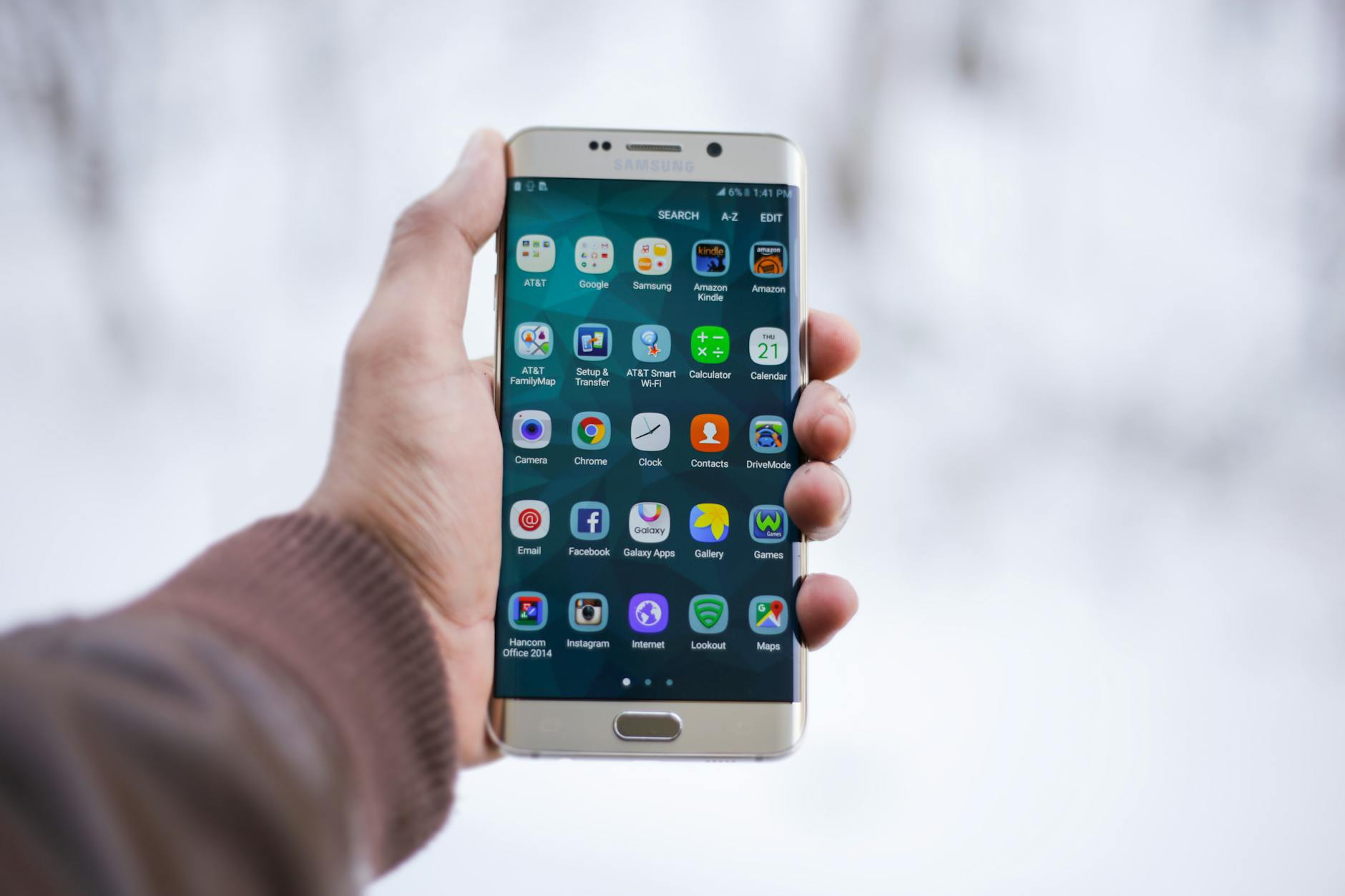
How do I delete my Samsung account?
Deleting a Samsung account is a permanent action that removes access to Samsung Cloud backups, the Galaxy Store, Find My Mobile, Samsung Wallet/Pay, and associated services. You can generally initiate deletion through the Samsung account website (account.samsung.com) under your profile's Security or account-management options, or via Settings > Accounts and backup > Manage accounts on a Galaxy device. Samsung typically requires identity verification first. Deleting your Samsung account is separate from deleting Samsung Health data; you can generally delete Health data without deleting your account, and vice versa.
How do I delete apps on a Samsung Galaxy device?
Pre-installed Samsung apps (sometimes called bloatware) fall into two categories: those that can be fully uninstalled, and those that can only be disabled. To remove or disable an app, go to Settings > Apps, select the app, and tap Uninstall (if available) or Disable. Third-party apps from the Galaxy Store or Google Play can normally be fully uninstalled. Some deeply integrated Samsung system apps may only offer a Disable option rather than full removal, depending on firmware.
How do I delete a Samsung work profile?
A work profile on a Samsung device is typically provisioned by an employer via a Mobile Device Management (MDM) solution such as Samsung Knox. If your employer manages the profile, you may not be able to delete it without IT department involvement. If you set one up independently, you can generally remove it via Settings > Accounts and backup > Manage accounts (or the work-profile toggle in Settings, depending on version) and choosing to delete the work profile. Deleting a work profile removes all apps, data, and accounts within it. Work-profile data is isolated from personal-profile data, so any personal-profile Samsung Health data would be separate from a managed work profile.
How do I delete duplicate photos on a Samsung Galaxy device?
Samsung Gallery includes a built-in Suggestions feature (available on recent One UI versions) that can identify and recommend deletion of similar or duplicate images; look under the Gallery app's Suggestions or storage-management area. For more aggressive cleanup, Google Photos includes duplicate handling, and dedicated duplicate-finder apps from the Galaxy Store or Google Play can scan your library. Always review flagged duplicates manually before bulk deletion to avoid removing originals.
How do I delete voicemail on a Samsung Galaxy device?
Voicemail deletion depends on whether you use your carrier's visual voicemail, a third-party voicemail app, or the native Phone app. For carrier visual voicemail integrated into the Samsung Phone app, open the Phone app, go to the Voicemail tab, press and hold a message, then select Delete. Some carriers instead require you to call your voicemail number (often by holding 1) and follow automated prompts. Carrier visual-voicemail apps have their own in-app delete functions.
How do I delete cache on a Samsung Galaxy device?
Individual app caches can be cleared via Settings > Apps > [App name] > Storage > Clear cache. Clearing an app cache removes temporary files, not your personal data or the app itself. Some older Galaxy devices also supported wiping a system "cache partition" from Recovery Mode, but the availability of a dedicated "wipe cache partition" option varies by device and software version and is not present on all current models — so check your specific device's documentation before attempting Recovery Mode steps.
Key Takeaways
- The central claim is unverified. Reports suggest Samsung may link Samsung Health data retention to AI-training consent, but AIBites could not confirm the exact terms against Samsung's official published policy; treat the "consent-or-delete" framing as a reported, unconfirmed claim.
- If accurate, it would be an unusually blunt structure — pairing outright deletion with refusal of AI-training consent is more explicit than the "opt-out for service improvement" language commonly seen elsewhere, though we are not asserting the precise deletion policy of any competitor.
- Health data is a special category under GDPR Article 9, and coercive-consent mechanisms face a high "freely given" bar in the EU; regulatory scrutiny would be a genuine possibility for a policy of the reported kind.
- HIPAA generally does not protect consumer health app data in the US when the provider isn't a covered entity or business associate — a protection gap many users don't realise exists.
- Export your data first. Whatever the terms turn out to say, downloading a personal copy of your Samsung Health data is the single most useful immediate step.
- Machine unlearning is unsolved at scale. Data already used to train a model generally cannot be "un-trained," which is what would make any deletion-on-refusal asymmetry notable.
- The broader pattern matters. Demand for user health data to build AI features is industry-wide; the specific concern here would be about how consequences of refusal are framed.
- Samsung's delete functions vary by context. Deleting a Samsung account, work profile, app cache, duplicate photos, or voicemail are separate operations with distinct consequences, none automatically triggered by any health-data consent decision.
What Comes Next for Health Data and AI Consent
If a policy of the reported kind is confirmed, it could plausibly trigger two responses at once. In GDPR jurisdictions, a data protection authority challenge would be a realistic possibility: the "freely given" consent standard under Article 9 is a genuine hurdle for a deletion-as-consequence mechanism, and European DPAs have shown willingness to act on coercive digital consent designs since GDPR took effect in 2018. A ruling against such an approach would likely force a redesign of the consent flow and could influence how the industry handles health-AI training consent more broadly.
In the United States, where regulatory guardrails are comparatively weaker, outcomes are more likely to be shaped by consumer pressure and market competition. Apple — which has cultivated a privacy-first health narrative and points to on-device processing to support it — could use any such moment to sharpen its positioning. If enough users migrated to alternatives, reputational costs could outweigh training-data gains. These are competitive dynamics worth watching rather than certainties.
Longer term, the real question is whether regulators will establish a coherent framework for AI-training consent that meaningfully distinguishes between service improvement (broadly acceptable with clear disclosure), commercial model development for competitive advantage (arguably requiring genuine, informed opt-in), and downstream licensing to third parties (arguably requiring explicit, separately obtained, revocable consent). Until such a framework exists in a form that is both legally binding and technically enforceable, disputes like the one reported here are likely to keep recurring.
As concerns about AI data practices intensify across the technology sector, Samsung would be far from the only company facing hard questions about where users' private data ultimately ends up. The health-data frontier — because of its intimacy, sensitivity, and potential clinical significance — is where those questions are likely to be fought most fiercely, and the outcome will depend heavily on whether users, regulators, and competing platforms hold the line on what meaningful consent actually requires. We will update this article if Samsung publishes or clarifies the terms in question.
Topics
Sources
Comments(0)
No comments yet. Be the first to share your thoughts.
Join the conversation
Your email stays private and comments are reviewed before appearing.


