Tired: OpenAI Wired: Oppai
Wired ChatGPT's cultural moment is fading. See how one Bluesky joke and Wired magazine's own "Tired" verdict on GPT-5 captured the AI industry's turning
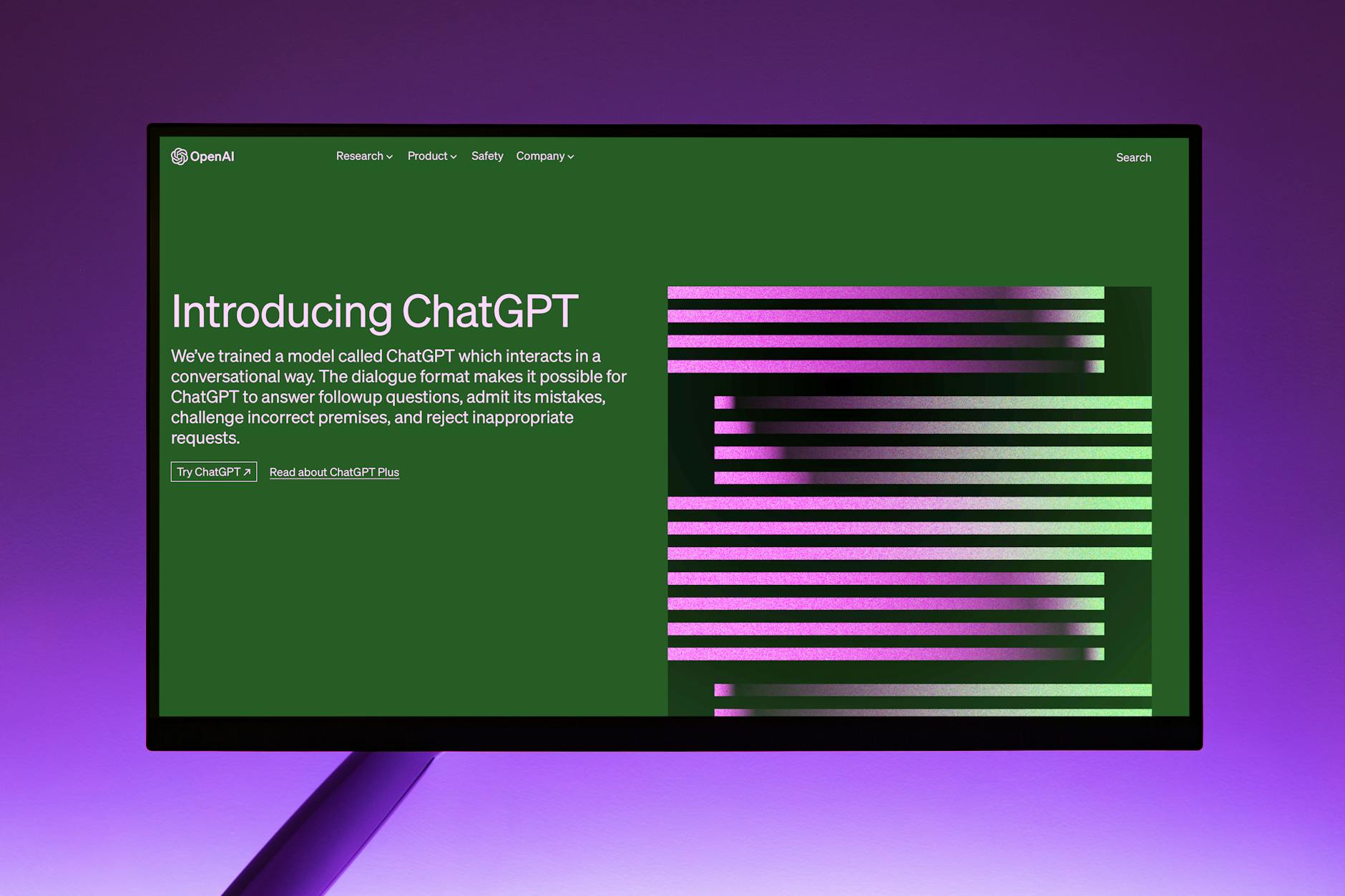
A single Bluesky post — five words long — managed to crystallize the cultural mood around OpenAI better than most op-eds. "Tired: OpenAI Wired: Oppai." Writer and veteran games journalist Jeremy Parish posted this quip on July 11, 2026, borrowing Wired magazine's own iconic rhetorical format to declare the AI industry's once-untouchable flagship passé. It landed because the underlying wired ChatGPT era really does appear to be winding down, replaced by a messier, more fragmented AI landscape that no single company dominates.
Unpacking the joke requires working through three layers at once: Wired's decades-old "Tired/Wired" meme, OpenAI's turbulent 2025–2026 run of openai news, and the broader shift in developer sentiment away from the company that invented modern consumer AI. What looks like a throwaway gag is actually a precise cultural diagnosis — and the fact that Wired itself had already placed GPT-5 in the "Tired" column months earlier gives the tired openai wired oppai joke an unusually solid factual foundation.
What "Tired/Wired" Actually Means — and Why Wired Magazine Owns It
Wired magazine has been running its "Tired/Wired" — and later "Expired/Tired/Wired" — feature since the 1990s. The format is brutally simple: two columns, one for things that are passé ("Tired") and one for things that are ascendant ("Wired"). It became one of the most imitated editorial formats on the internet, spawning countless variants across Twitter, Tumblr, Bluesky, and beyond.
The format works because it forces a binary judgment on complex cultural phenomena. It doesn't explain; it pronounces. That compression is both its appeal and its edge. When Wired calls something "Tired," it isn't just reporting a trend — it's nudging the reader to feel a particular kind of embarrassment about still caring about yesterday's thing. The magazine's authority to make that call rests on three decades of being, roughly speaking, right about what comes next in technology and culture.
For its annual Expired/Tired/Wired 2025 roundup, the editors made a pointed call on the wired ai issue of the moment: GPT-5 went in the "Tired" column. Senior writer Will Knight's entry, headlined "So Long, GPT-5. Hello, Qwen," argued that Alibaba's open-weight Qwen model had become the more consequential AI of the moment — adopted by BYD, Rokid, Airbnb, Perplexity, Nvidia, and even Meta — while GPT-5, unveiled on August 7, 2025, had "underwhelmed," with users complaining of "an oddly cold demeanor" and making "surprisingly simple errors." Llama 4, Meta's previously dominant open-weight option, landed in the "Expired" column — an even harsher verdict.
Why it matters: When the publication that effectively evangelized the internet age puts your flagship product in the "Tired" column, you have a cultural problem that no benchmark score can fix.
That editorial judgment, made independently of any Bluesky joke, is what gives the Parish post its resonance. The wired open ai story had already been written; Parish simply compressed it into five words.
The Parish Post: A Five-Word Verdict on OpenAI's Cultural Standing
Jeremy Parish — a veteran games journalist and retrogaming historian whose Bluesky handle is jparish.bsky.social — posted the now-circulating line on July 11, 2026. The joke is mechanical in its precision:
- Tired: OpenAI — the reigning giant of consumer AI, now associated with hype cycles, leadership exits, and product disappointments that failed to match expectations.
- Wired: Oppai — the Japanese word for breasts (おっぱい), selected purely because it is nearly homophonic with "OpenAI" when spoken aloud: oh-PAI versus oh-pen-AI. Strip two syllables and you have the same dominant vowel sounds. Parish isn't making a serious argument about Japanese slang; the substitution is the entire comic mechanism.
The phonetic substitution does all the heavy lifting. By invoking the Wired format, Parish maximizes comic deflation — the implication being that a near-homophone for something juvenile sounds more culturally alive right now than the most-funded AI company on Earth. The joke works because the audience already believes the premise. Parish isn't arguing; he's confirming.
It's also self-aware about the "Tired/Wired" format itself. By mid-2026, the template is, in some circles, already a little tired — a point several other Bluesky users noted sardonically the same week. The post is therefore recursive: it uses a slightly-dated internet template to declare a tech giant dated, meaning the meta-joke is simultaneously about the datedness of the joke format itself. That's a remarkable amount of work for five words and a colon.
Why "Tired: OpenAI" Resonates: A Timeline of Wired AI News Gone Wrong
The Parish post didn't arrive in a vacuum. The tired openai wired sentiment had been accumulating for roughly eighteen months, fed by a steady drumbeat of openai news that consistently skewed unflattering.
GPT-5's Underwhelming Debut
When OpenAI unveiled GPT-5 on August 7, 2025, the AI community expected a genuine step-change — the kind of capability leap that had made GPT-3 and GPT-4 feel like inflection points. What it received, according to Wired's own wired ai news reporting, was a model users described as having "an oddly cold demeanor" and making "surprisingly simple errors." The company simultaneously released lighter open-weight models called gpt-oss-120b and gpt-oss-20b, but they failed to gain meaningful traction against Qwen and DeepSeek in the open-weight developer ecosystem.
For a company that had defined the AI frontier since November 2022, shipping a flagship model that prompted the reaction "this is it?" was a significant reputational wound — not because the model was bad, but because it was merely incremental at a moment when the market expected transformative. That gap between expectation and delivery is exactly where the tired openai narrative took root.
The Researcher Exodus
Developer trust in OpenAI eroded further through a sustained wave of high-profile departures — the openai researcher quits headlines that accumulated across 2024 and into 2025. Former head of policy research Miles Brundage left in October 2024, publicly stating that the company had become "too restrictive" and that it was "hard for me to publish on all the topics that are important to me" — a striking statement from someone who had spent years building OpenAI's research credibility externally.
Jan Leike, a prominent safety researcher who had led OpenAI's Superalignment team, announced his resignation in May 2024, publicly writing that "safety culture and processes have taken a backseat to shiny products" and that he had "gradually lost trust" in OpenAI's leadership. Within days, he announced he was joining Anthropic — a rival lab founded by former OpenAI employees — making the break both public and definitive. Across 2025, reported tallies of significant executive and researcher departures ran into double figures, with multiple researchers subsequently joining rival labs including Meta.
The pattern matters to developers because research credibility is a form of trust infrastructure. When the people building the models leave citing concerns about transparency and safety culture, it signals that the technical community's faith in OpenAI as an intellectual institution — not merely a product vendor — is eroding.
Fidji Simo's Departure and the Leadership Carousel
Perhaps the most symbolically loaded piece of wired fidji simo-adjacent openai news in the lead-up to the Parish post was the departure of Fidji Simo. Simo — previously CEO of Instacart and head of the core app at Meta — had joined OpenAI's board in March 2024. In May 2025, Sam Altman hired her to join the company full-time as CEO of Applications (a title that later evolved to CEO of AGI Deployment), overseeing product and business operations so that Altman could redirect his attention toward research and infrastructure strategy.
In April 2026, Simo began a medical leave to manage a severe exacerbation of postural tachycardia syndrome (POTS), a chronic neuroimmune condition she had been navigating since 2019. By July 9, 2026 — just two days before the Parish post — it became clear that her recovery would require far more time than a standard leave could accommodate, and she announced she was stepping down from her full-time role to serve as a part-time adviser. OpenAI president Greg Brockman assumed responsibility for product strategy in her absence.
Simo's exit was sympathetic in personal terms; her public health disclosure was candid and widely respected across the industry. But as a piece of wired fidji simo coverage, it arrived at the worst possible moment — adding yet another chapter to a narrative of organizational instability at the top of a company whose rivals were closing the capability gap with every new model release.
The Competitive Landscape That Makes the Joke Land
Wired's wired ai issue coverage throughout 2025 documented precisely why credible alternatives now exist to make OpenAI look "tired." The competitive landscape has shifted in ways that would have seemed almost unimaginable at the height of the wired ChatGPT moment in early 2023.
| Model / Company | Status | Source of Assessment | Notable Adopters | Key Characteristic |
|---|---|---|---|---|
| GPT-5 (OpenAI) | Tired | Wired Expired/Tired/Wired 2025 | Consumer and enterprise mainstream | Underwhelmed at launch; "oddly cold demeanor"; incremental gains |
| Qwen (Alibaba) | Wired | Wired Expired/Tired/Wired 2025 | BYD, Rokid, Airbnb, Perplexity, Nvidia, Meta | Open-weight; deployable on-device and in the cloud; broad ecosystem adoption |
| DeepSeek (Chinese lab) | Rising (developer community) | Broad developer forum and industry reporting | Open-source developers globally | Competitive performance at a fraction of the compute cost; sparked industry-wide cost debate |
| Llama 4 (Meta) | Expired | Wired Expired/Tired/Wired 2025 | Previously dominant open-weight option | Superseded by Chinese open-weight models in developer adoption metrics |
gpt-oss-120b / gpt-oss-20b (OpenAI) |
Limited developer uptake | Industry reporting on open-weight adoption | Minimal reported adoption | OpenAI's open-weight attempt; failed to compete meaningfully with Qwen or DeepSeek |
For developers, this table represents something more significant than a routine rankings shuffle. Open-weight models from Qwen and DeepSeek can be run locally, fine-tuned without ongoing API costs, and deployed without structural dependence on OpenAI's infrastructure, pricing tiers, or usage policies. That's a durable competitive advantage — a matter of architecture and business model, not just benchmark scores — and it's precisely why technically literate readers find the "tired openai wired oppai" framing so satisfying. The joke confirms what they already knew from their own deployment decisions.
What the Meme Reveals About Developer Sentiment
The "Tired/Wired" joke format functions as a cultural barometer precisely because it's social rather than technical. You don't need to read a benchmark leaderboard to understand it; you just need to sense which camp your peers are in. And by mid-2026, a meaningful and vocal segment of the developer and tech-adjacent community has shifted its emotional allegiance — not necessarily toward a specific alternative, but definitively away from the reflexive equation of "AI" with "OpenAI" or "ChatGPT."
This shift surfaces in several places beyond the Parish post:
- Wired's own "Expired/Tired/Wired" feature independently declaring GPT-5 passé while elevating a Chinese open-weight model — an editorial verdict from the publication most associated with tech enthusiasm.
- The broader pattern of wired open ai coverage framing OpenAI as a company managing organizational turbulence rather than riding a wave of pure technical ascendance.
- Social media discourse that increasingly treats ChatGPT as a default consumer utility (functional, unremarkable, like a search engine) rather than a marvel worth evangelizing.
- Developer forum conversations where OpenAI's API pricing, rate-limit unpredictability, and restrictive fine-tuning policies come up as friction points rather than acceptable costs of using a superior product.
For developers specifically, "tired openai" encodes a set of concrete grievances that have built up over time: API pricing structures that penalize experimentation, rate limits that constrain production workloads, fine-tuning policies that restrict customization, and a product roadmap that has increasingly prioritized consumer features over developer infrastructure. The excitement of 2022–2023, when API access to GPT-3 felt like unlocking a superpower, has given way to a more transactional relationship: use OpenAI's models when they represent the best option for a specific task, and acknowledge — increasingly openly — that they often don't.
The Broader Wired AI Issue: A Magazine Reckoning with Its Own Moment
Wired magazine's AI-focused coverage has increasingly treated the technology as simultaneously a kink, an economic bubble, a therapist, a screen killer, a religion, a military weapon, and a new form of journalism. That plurality is itself an editorial statement: AI is no longer a single story with a single protagonist and a single set of boosters. The terrain is fractured, contested, and impossible to reduce to a hero narrative.
When Wired launched in 1993, it positioned itself as the voice of a new techno-utopian movement — a publication so convinced of technology's emancipatory potential that it named itself after the condition of being plugged in and switched on. The publication's willingness, three decades later, to place GPT-5 — the product of a company whose founder has spoken openly about building artificial general intelligence — in the "Tired" column is a meaningful signal. Even the magazine most historically associated with tech optimism has absorbed the cultural exhaustion with OpenAI's particular brand of AI maximalism.
The tired openai wired framing — whether it originates from the magazine's own feature desk or from a five-word joke on a social platform — points to the same underlying shift: the conversation about AI has moved from wonder at what large language models can do to sustained scrutiny of what OpenAI as an organization has become, and whether the company's interests are aligned with the developers, researchers, and users who made it powerful.
Key Takeaways
- "Tired: OpenAI Wired: Oppai" is a July 11, 2026 Bluesky post by writer Jeremy Parish, using Wired magazine's iconic Tired/Wired format to declare OpenAI culturally passé through a phonetic pun — "Oppai" (Japanese for breasts; おっぱい) sounds nearly identical to "OpenAI" when spoken aloud.
- Wired's own Expired/Tired/Wired 2025 feature independently placed GPT-5 in the "Tired" column and named Alibaba's Qwen as the "Wired" model, giving the meme a factual foundation in the magazine's own published editorial judgment — not just social media sentiment.
- Fidji Simo, OpenAI's CEO of AGI Deployment, stepped down from her full-time role on July 9, 2026 — two days before the Parish post — due to a chronic health condition, adding another chapter to a documented pattern of executive instability at the company's leadership level.
- A sustained pattern of researcher and executive departures — including Miles Brundage, who said it had become "hard for me to publish on all the topics that are important to me," and Jan Leike, who publicly cited a safety culture subordinated to product velocity before joining Anthropic — has eroded the intellectual credibility OpenAI once wielded as a research institution rather than merely a product company.
- Open-weight Chinese models — particularly Qwen and DeepSeek — have materially displaced OpenAI's position at the developer frontier by offering competitive performance without API lock-in, usage policy restrictions, or per-token cost structures.
- The joke operates on multiple recursive levels: as a direct commentary on OpenAI's cultural standing, as a meta-joke about the "Tired/Wired" format itself, and as a precise read on how developer and tech-community sentiment has evolved since ChatGPT's peak cultural moment in early 2023.
- For developers, "tired openai" encodes real, specific grievances: API pricing that penalizes experimentation, restrictive fine-tuning policies, GPT-5's underwhelming launch relative to expectations, and the structural advantages of open-weight alternatives that don't require ongoing vendor dependence.
What Comes Next
OpenAI isn't going away. ChatGPT still commands an enormous global user base — the company has publicly cited figures in the hundreds of millions — the organization retains extraordinary capital reserves and infrastructure investment, and Sam Altman's track record of navigating what should have been company-ending crises — from the November 2023 board coup to the subsequent restructuring — is genuinely remarkable. The organization has survived internal ruptures that would have destroyed less aggressively resourced startups.
But the cultural moment the Parish post captures is real, and it's probably more durable than a single news cycle. The window in which "OpenAI" and "AI" were effectively synonymous — in which using ChatGPT was the same gesture as embracing the future — has closed. The company now occupies the uncomfortable position of an incumbent defending market share against open-weight challengers who have the structural advantage of zero marginal distribution cost, against enterprise rivals with deeper sales relationships, and against a developer community that has internalized alternatives.
With Greg Brockman now steering product strategy in Simo's absence, a leadership structure under active reconstruction, and Qwen and DeepSeek accelerating their release cadences, the next meaningful cultural signal will be whether OpenAI can ship a model release that recaptures the sense of genuine surprise and capability leap that made GPT-4 feel like a landmark. If it can, the "Tired" label becomes a footnote. If it can't — if the next major release lands as another incremental update in a crowded field — the meme may calcify into received wisdom, and the wired ChatGPT moment will be remembered as a specific, time-bounded phenomenon rather than a permanent reordering of the technology landscape. The company that invented the consumer AI era is now racing to avoid becoming its most prominent cautionary tale.
Topics
Comments(0)
No comments yet. Be the first to share your thoughts.
Join the conversation
Your email stays private and comments are reviewed before appearing.