Workspaces.xyz: How a $1 Buyback Built a 21,000-Reader Archive
From Pandemic Side Project to Independent Media Archive Workspaces.xyz was founded by Ryan Gilbert and went live on April 5, 2020 — the moment remote work
Researched and drafted with AI assistance, then screened by automated editorial checks before publishing. How we work.

From Pandemic Side Project to Independent Media Archive
Workspaces.xyz was founded by Ryan Gilbert and went live on April 5, 2020 — the moment remote work ceased being a corporate perk for many and became, for millions, a sudden default. Gilbert's instinct was sharp: professionals were suddenly sharing home office photos online, and there was something genuinely compelling about those images beyond the gear specs. The appeal, as the project has consistently framed it, lay less in the raw hardware and more in the human texture of a setup — the plants, the art, the improvised cable runs, the specific chair someone spent too much money on. Each setup reads as a portrait of a working life, not a product listing.
The formula was deliberately minimal: interview one person per week, publish their photos and gear list, ask a consistent set of questions, repeat. The very first issue featured Shivkanth Bagavathy, an engineer at Facebook at the time. Early momentum was modest but meaningful. Crossing the first 1,000 subscribers was, by Gilbert's own account, an outsized milestone — proof that the audience extended well beyond his immediate circle, and that a thousand people genuinely wanted to see how other people work.
The project has not had a frictionless trajectory. In August 2022, Gilbert sold Workspaces to a company called Loops. After subsequently being laid off, he bought it back in May 2024 for $1 — a figure Gilbert has cited publicly, and one that underscores both the fragility of independent media acquisitions and the deeply personal stakes of creator-run projects. Since regaining sole ownership, the newsletter has grown steadily, crossing the 20,000-subscriber mark and, as of 2026, standing at 21,000+ subscribers — growth that has prompted Gilbert to openly consider whether the project can become a legitimate, sustainable business.
When the pandemic forced the world indoors in early 2020, one independent publisher decided to turn remote-work desk photos into a permanent, browsable archive — and the result is Workspaces.xyz, a free weekly newsletter that lets readers explore the real setups of designers, developers, founders, and builders one Saturday at a time. With more than 21,000 subscribers, over 500 workspace tours published, and roughly 3.5 million cumulative archive views, Workspaces has quietly become one of the more data-rich lenses available for understanding how the modern knowledge worker actually lives, creates, and operates.
The Archive: Scope, Structure, and Scale
What distinguishes Workspaces from a "battlestation" subreddit or a gear influencer's YouTube channel is the depth, consistency, and searchability of its archive. Rather than scattering individual posts across an algorithm-driven feed, the site maintains a structured, filterable database of working environments. As reported on the site, the archive's approximate scale is as follows (figures are point-in-time and grow week to week):
- 533 individual creator interviews and full workspace tours
- 3,798 unique products documented across all profiled setups
- 2,091 of those products with direct purchase links
- 22 browsable gear categories, from monitors to lighting to desk accessories
- 70,000+ social media followers across platforms
- ~3.5 million total archive views since launch
Each entry follows a consistent editorial structure: workspace photography shot in the creator's actual environment, a short bio anchoring the subject in a city and professional discipline, a fully hyperlinked gear list, and responses to the same recurring interview questions. That consistency is precisely what transforms individual profiles into comparable data points. Readers can browse the archive by profession, hardware platform, furniture brand, and other lenses — turning what began as a newsletter into a structured, longitudinal record of how creative professionals configure their physical environments.
The site has been described as a kind of MTV Cribs for workspaces — a comparison that captures the voyeuristic appeal while underselling the analytical utility. Cribs was entertainment built around aspiration; Workspaces is closer to ethnography built around honesty.
Nine Curated Collections: A Taxonomy of How Modern Creators Work
One of the most analytically useful features of the site is its collections system. Rather than forcing readers to scroll through 500+ entries chronologically, Workspaces organises its full archive into nine curated collections that span profession, hardware philosophy, furniture brand, and aesthetic preference. Together, they reveal clear and instructive clusters in how different types of creators approach their physical working environments. The setup counts below are drawn from the site's collection listings and represent a point-in-time snapshot.
| Collection | Number of Setups | Primary Lens |
|---|---|---|
| Apple Ecosystem | 424 | Hardware platform |
| Designers | 200 | Profession |
| IKEA | 157 | Furniture brand / budget tier |
| Standing Desks | 151 | Ergonomic philosophy |
| Founders | 126 | Role / business stage |
| Developers | 78 | Profession |
| Plants | 60 | Aesthetic / biophilic environment |
| Single Monitor | 46 | Display philosophy |
| Multi-Monitor | 24 | Display philosophy |
The Apple collection's 424 entries — roughly 80% of the total archive — is one of the most telling data points on the site. Within the creative professional and founder communities the newsletter targets, Apple hardware functions less as a deliberate choice and more as an ambient assumption, the baseline from which other decisions are made. The IKEA and Standing Desks collections, at 157 and 151 setups respectively, illustrate a pragmatism that cuts across income levels: a Fully Jarvis standing desk frame typically starts in the several-hundred-dollar range, while a Herman Miller Aeron chair typically retails from roughly $1,500–$1,800 depending on configuration. These two communities overlap significantly — often frugal on the desk surface itself, more willing to invest in posture and ergonomics.
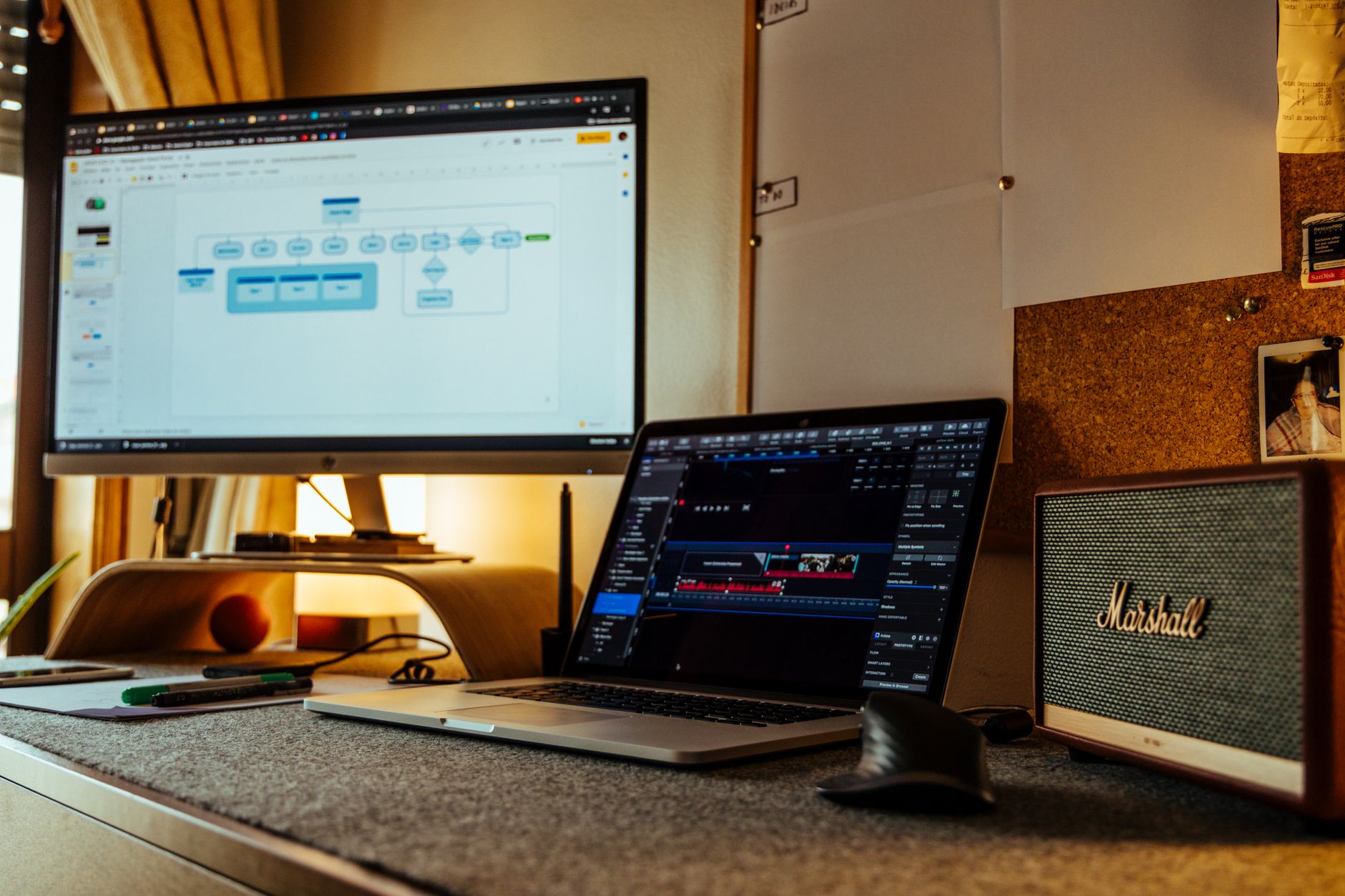
The contrast between the Single Monitor (46 setups) and Multi-Monitor (24 setups) collections is worth noting for what it suggests about workflow philosophy. Single-monitor minimalism tends to correlate with writers, product designers, and founders who prize focus; multi-monitor configurations cluster around video editors, developers managing multiple terminal windows, and data-heavy roles. The archive makes that pattern visible at a glance.
The Gear Database: What 533 Creators Actually Use
The gear database is where Workspaces transitions from editorial project to informal market-research instrument. With 3,798 products logged and cross-referenced across 533 interviews — and 2,091 of those products linked for direct purchase — the dataset offers a rare ground-level view of real purchasing decisions: not what creators say they recommend in a sponsored video, but what they actually have on their desks or plugged into their hubs. The table below shows the ten most frequently appearing products across all profiled setups, as reported by the site, along with the number of setups each appears in. Percentages are calculated against the 533-setup total and are approximate.
| Rank | Product | Category | Setups | % of Total Archive |
|---|---|---|---|---|
| 1 | MacBook Pro | Computer | 310 | ~58% |
| 2 | Apple Magic Keyboard | Keyboard | 125 | ~23% |
| 3 | Apple Magic Trackpad | Mouse / Input | 83 | ~16% |
| 4 | Apple Studio Display | Monitor | 82 | ~15% |
| 5 | Apple AirPods Pro | Headphones | 71 | ~13% |
| 6 | Apple Magic Mouse | Mouse | 65 | ~12% |
| 7 | Herman Miller Aeron | Chair | 49 | ~9% |
| 8 | Apple AirPods Max | Headphones | 46 | ~9% |
| 9 | Fully Jarvis Standing Desk | Desk | 43 | ~8% |
| 10 | Logitech MX Master 3 | Mouse | 43 | ~8% |
Six of the top ten products are Apple hardware. The MacBook Pro appears in 310 of 533 setups — a roughly 58% penetration rate that no single Windows laptop comes close to matching in this cohort. No Windows machine cracks the top ten, and only one non-Apple peripheral does: the Logitech MX Master 3 at rank ten, suggesting that third-party input devices can break through the Apple ecosystem's gravitational pull when they offer meaningfully superior ergonomics or programmability.
The Herman Miller Aeron at rank 7, with 49 setups, likely understates total ergonomics investment in the archive: Herman Miller also appears via its Sayl and Cosm models, and the broader category of premium ergonomic seating — including Secretlab, Steelcase, and HÅG — adds further entries. The Aeron's position as the single most common chair in an archive this size is a testament to its durability as a professional standard, and to the price tolerance of a community that has already spent significantly on monitors and computers.
The Microphone Category: A Signal About Changing Work Habits
The microphone category warrants separate attention because it is among the more revealing categories in the database. Within the archive, the Shure MV7 leads with 26 setups, followed by the Shure SM7B at 20 and the Blue Yeti at 19. Dedicated USB and XLR microphones only matter if you are regularly recording — podcasting, live streaming, async video messaging, YouTube tutorials, developer screencasts, or product-launch broadcasts. Their density in workspaces belonging to designers, developers, and founders — not just full-time content creators — suggests that broadcast-quality audio has become a professional baseline across much of knowledge work, rather than a specialty niche. The professional who five years ago would have joined a Zoom call on laptop audio now often maintains a dedicated mic and, in many cases, acoustic treatment. That shift is visible in the gear data in a way it would rarely appear in a corporate IT procurement survey.
Who Gets Featured: A Global Cross-Section of Creative Work
Looking at who Workspaces actually profiles, the archive is strikingly diverse in geography and career stage while remaining consistent in its professional orientation. It is not solely a gallery of aspirational Silicon Valley engineers with five-figure desks. Recent and representative profiles include:
- Maxime Heckel — Frontend Software Engineer, New York City
- Tiancheng Luo — Tech and Lifestyle Creator, Product Designer
- Tom Snyder — Marketer and Entrepreneur, Austin, TX
- Soundharya Muthukrishnan — Designer, Brooklyn, NY
- Matthew Encina — Content Creator and Creative Director, Los Angeles
- Jessica Strelioff — Independent Brand Designer
- Kenneth Gudz — Retired Dentist, South Carolina
- Spencer Scott Pugh — Tech Creator and Writer, Virginia
- Faizur Rehman — Designer and Solopreneur, Prague
- Luboš Volkov — Designer, Prague
A retired dentist in South Carolina sitting alongside a bootstrapped solopreneur in Prague reflects a deliberate editorial ethos: that the intersection of physical environment and creative output matters across age groups, continents, and career stages. That breadth is what makes the archive representative rather than merely aspirational, and it is why the gear data drawn from it is more generalisable than data from a narrower, more demographically homogenous publication.
Why it matters: The workspace is increasingly understood as a measurable productivity variable, not a vanity project. A substantial body of research in environmental psychology links workspace factors — lighting quality, ergonomic support, acoustic conditions, visual order, and the presence of greenery — to comfort, mood, and sustained cognitive performance. Workspaces.xyz is one of the few public archives where you can observe, at genuine scale and over multiple years, how practitioners actually act on that understanding, rather than how they say they would in a survey.
The Business Model: Independent, Affiliate-Supported, Reader-Funded
Workspaces operates on a lean, structurally transparent model typical of the best independent newsletters. Revenue comes from two primary sources: affiliate links — including Amazon Associates commissions — embedded in the gear lists of each profile, and direct advertising sold to brands that are a natural fit for the audience: monitor manufacturers, desk makers, ergonomics companies, and software tools aimed at creative professionals. Neither source requires the editorial content itself to be commercially distorted.

The site also offers a free downloadable "Gear Report" PDF — a compiled ranking of the most-used products across the archive, with purchase links — which functions simultaneously as a high-value reader resource, an audience-retention tool, and an email list growth mechanism for new visitors discovering the archive for the first time.
The affiliate model aligns incentives in an important structural way. Unlike a traditional review site that can generate revenue by steering readers toward whichever product pays the highest commission, Workspaces earns primarily when a reader clicks through from a profiled creator's actual, unprompted gear list. The editorial content — what appears in each setup — is determined largely by the profiled subject rather than by what generates the most revenue per click. That structural separation between content creation and monetisation is relatively rare in gear-adjacent publishing, and it is plausibly one reason the archive commands genuine audience trust rather than the ambient skepticism that often trails sponsored content.
The platform-independence dimension of this model is also worth naming explicitly. As the broader creator economy continues to grapple with the risks of building on rented land — algorithmic reach that can evaporate overnight, or sudden, unilateral platform changes that can erase years of accumulated investment — Gilbert's newsletter-first architecture, built on direct email relationships with 21,000+ subscribers rather than on any single platform's goodwill, offers meaningful structural resilience against those failure modes.
What the Data Reveals About the Modern Creator's Environment
Aggregating across 533 profiles and nearly six years of consistent documentation, several macro-patterns emerge that are worth naming explicitly for a technically sophisticated audience seeking to understand these trends. The observations below are drawn from the archive's self-reported figures and should be read as reflecting this particular, self-selected community rather than the workforce at large.
Apple's Monoculture Is Real, Remarkably Stable, and Compounding
With 424 of 533 setups falling into the Apple Ecosystem collection and the MacBook Pro present in 310 of those, the creative and technical professional community documented in this archive is, for practical purposes, an Apple monoculture. The compounding effect is significant: the most popular monitor is the Apple Studio Display, the most popular keyboard is the Apple Magic Keyboard, and the most popular primary input device is the Apple Magic Trackpad — all products designed primarily or exclusively to integrate with Apple hardware. Each Apple purchase makes the next one more likely, and the archive makes that gravitational pull visible at scale. The Logitech MX Master 3's appearance at rank ten is the primary exception that proves the rule, suggesting that third-party peripherals can penetrate the ecosystem when they offer genuinely differentiated ergonomics or programmability. As local AI inference grows more accessible and practically useful, it will be worth watching whether the developer cohort within Workspaces begins migrating toward high-RAM Windows or Linux workstations capable of running large models locally — which would represent one of the first meaningful cracks in the Apple monoculture the archive has documented since 2020.
Ergonomics Spending Is Bifurcated by Career Stage, Not by Priority
The simultaneous prevalence of IKEA furniture (157 setups) and the Herman Miller Aeron chair (49 setups, retailing from roughly $1,500–$1,800) is not necessarily a contradiction within the same community — it plausibly reflects different stages in a predictable career arc. Many of the IKEA setups appear to belong to younger developers, indie hackers, and early-stage founders who have invested heavily in screens, computers, and microphones and remain functionally desk-agnostic: they will buy an IKEA Bekant or Alex desk and consider the problem solved. The Aeron and Fully Jarvis crowd tends to skew toward those who have spent enough years at a desk to experience the physical consequences of poor ergonomics — lower back pain, wrist strain, neck tension — and have decided that their body is the highest-leverage hardware investment remaining. Both choices are rational given the constraints of each stage; neither is frivolous.
The Microphone Is the New Whiteboard
The density of dedicated microphones — Shure MV7, SM7B, Blue Yeti — in workspaces belonging to designers, developers, and founders who are not primarily content creators reflects a structural shift in the medium of professional communication. Asynchronous video messages, internal team podcasts, developer screencasts, live-streamed product launches, and recorded walkthroughs have collectively made broadcast-quality audio a professional baseline rather than a specialty affectation. A creator who five years ago would have dialled into a Zoom call on built-in laptop audio now often maintains a dedicated recording chain — microphone, boom arm, audio interface or USB preamp, and in many cases an acoustic panel or portable vocal booth. That investment is visible in the gear data in a way it would rarely surface in a traditional IT procurement analysis, and it speaks directly to the blurring boundary between builder and broadcaster that defines the modern independent creator.
Exploring Workspaces: Key Takeaways
- Workspaces.xyz is a free, independently operated weekly newsletter founded by Ryan Gilbert on April 5, 2020, that publishes real desk setups from designers, founders, developers, and creators worldwide, roughly one profile per week.
- The archive spans approximately 533 interviews, 3,798 unique products, 2,091 linked products, and ~3.5 million total archive views — making it one of the more substantive public datasets on how modern knowledge workers configure their working environments.
- Apple hardware dominates at a striking and consistent rate: the MacBook Pro appears in roughly 58% of all setups; six of the top ten most-used products are Apple hardware; and about 80% of all setups fall into the Apple Ecosystem collection.
- The Herman Miller Aeron is the most common chair (49 setups); the Fully Jarvis the most common standing desk (43 setups); and the Shure MV7 the most common dedicated microphone (26 setups).
- Nine curated collections — organised by profession, hardware platform, furniture brand, display configuration, and aesthetic — let readers filter and explore the full archive by relevant context, from the 424-setup Apple Ecosystem collection to the 60-setup Plants collection.
- The business model combines affiliate links and direct advertising in a structure that helps preserve editorial integrity: gear lists are determined largely by each profiled creator, not by commission rates or sponsor relationships.
- Ryan Gilbert repurchased Workspaces for $1 in May 2024 — a price he has cited publicly — after an earlier acquisition by Loops, re-establishing the newsletter as a fully independent project.
- The newsletter reached 21,000+ subscribers and 70,000+ social media followers as of 2026, making it one of the larger independent publications focused on workspace culture and creator environments.
As remote and hybrid work sheds its pandemic-emergency associations and becomes simply the default mode for a significant portion of knowledge work, archives like Workspaces.xyz will only grow more analytically useful — both as a source of practical inspiration for individuals configuring their own environments, and as longitudinal data for researchers, marketers, and product teams trying to understand how creative professionals actually make purchasing decisions. Gilbert has publicly weighed whether a 21,000-subscriber newsletter with millions of archive views and thousands of documented products can become a genuinely sustainable independent business. Given the affiliate infrastructure already in place, the depth and cross-referenceability of the gear database, the growing audience appetite for authentic documentation over aspirational influencer content, and the structural resilience of a direct email-first publishing model, the trajectory looks promising. The next logical evolutions — sponsored deep-dive issues, a premium subscription tier with extended or video-format profiles, or a structured data-licensing arrangement for the gear database — are all within reach without compromising the editorial independence that built the audience in the first place. Whatever form that growth takes, the core asset is already built: more than five years of honest, consistent answers to the question of where, how, and with what the people who build things actually do their work.
Topics
Sources
Comments(0)
No comments yet. Be the first to share your thoughts.
Join the conversation
Your email stays private and comments are reviewed before appearing.


